This article includes AI generated content (text, images) obtained with Pressnaut. All content has been fact-checked and manually revised by an human editor.
The first thing you notice is the air. You step off the train in Viareggio and the salt hits you — not harsh, but insistent, like someone tugging your sleeve. Behind you, the marble peaks of the Apuan Alps catch the late-morning light. Ahead, a wide promenade lined with Liberty-style facades opens toward the sea. It takes about twenty minutes to get here from Lucca by rail. Twenty minutes from medieval stone walls to sand between your toes.
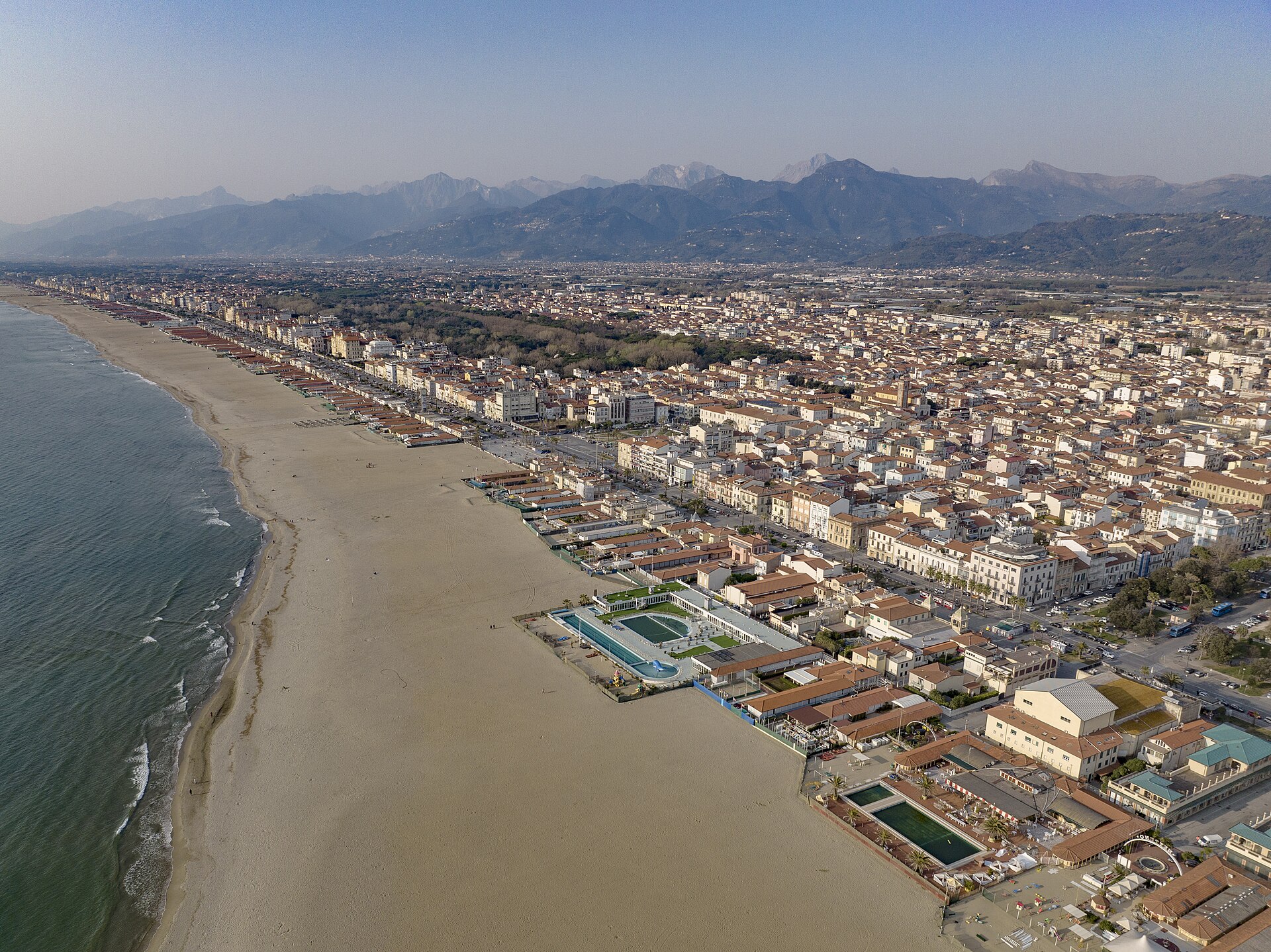
The Versilia coastline stretches across 20 kilometers south of Lucca, running from Viareggio in the south to the edge of Massa in the north. It’s a ribbon of sandy shore pressed between mountains and the Tyrrhenian Sea — a landscape that feels almost theatrical in its contrasts. The whole coast sits within the Province of Lucca, which means if you’re staying inside the walled city, the beach is quite literally in your backyard.
What makes this stretch of Tuscany worth a day — or several — is that it’s not just one thing. Versilia is both fun and cultured, as the Italians like to say. You’ll find Blue Flag certified beaches alongside sculpture gardens, marble workshops alongside gelaterias doing serious work. It’s the kind of day trip where you can swim in the morning, eat a plate of cacciucco for lunch, and stand in front of a Botero bronze before dinner. If you’ve already explored the Garfagnana valley in the mountains north of Lucca, the coast offers a perfect counterweight — same province, entirely different mood.
Let’s start with the good news: you don’t need a car. The regional train network offers direct connections from Lucca to Camaiore, Viareggio, Pietrasanta, and Forte dei Marmi-Seravezza-Querceta. Viareggio is the quickest and most frequent service — trains run roughly every thirty minutes during summer, and the ride is short enough that you’ll barely finish your coffee. Buy tickets at the station or through the Trenitalia app, and remember to validate your paper ticket before boarding. I learned that lesson once. Just once.
Viareggio is the closest and most easily accessible beach from Lucca via public transportation, but the other towns are only a stop or two further up the line. Forte dei Marmi’s station (officially Forte dei Marmi-Seravezza-Querceta) is a short bus or taxi ride from the beach itself — not walkable in the way Viareggio is, so factor that in if you’re traveling light on logistics.
If you’re driving, the autostrada from Lucca is the fastest route — you’ll reach most beach towns in 30 to 40 minutes. From the Bagni di Lucca area, the drive takes approximately one hour via the autostrada through Lucca. There’s also a scenic alternative through Camaiore that adds time but rewards you with rolling Tuscan hills, stone villages, and the kind of light that makes you pull the car over for a photograph. Bus service exists too, but honestly, the train is easier, cheaper, and drops you closer to the sand.
Viareggio is one of Italy’s best-known seaside resort towns, and it wears that reputation with a specific kind of confidence — not flashy, but established. It’s the town Italians picture when they think of a proper summer al mare. The seafront Passeggiata is its spine: a long, elegant promenade lined with cafés, shops, and buildings in the ornate Liberty style (Italy’s version of Art Nouveau, all curved iron and pastel plaster).
For first-time visitors coming from Lucca, Viareggio is the obvious starting point. Step out of the train station, walk straight toward the water, and within ten minutes you’re choosing between dozens of stabilimenti — the paid beach clubs that define Italian coastal life — or hunting for a patch of spiaggia libera, the free public stretches. The beach here is wide and sandy, the water shallow enough for children to wade out comfortably. In high season it hums with the particular energy of Italian families settling in for a full day: coolers, card games, grandmothers under umbrellas reading their gialli.
What I appreciate about Viareggio is that it doesn’t pretend to be something it isn’t. It’s a working resort town with genuine character, not a manufactured experience. The architecture along the Passeggiata has real beauty, and if you time your visit right, you can catch the tail end of afternoon light turning the facades gold. If you’re planning to extend your evening, the Versilia nightlife scene comes alive here and along the coast during summer months.
One of the things I had to unlearn when I moved to Italy was the American instinct to rank everything. These beach towns don’t need a winner — they need the right match. Each of the towns along Versilia’s 20-kilometer coastline has its own rhythm, and choosing well will shape your entire day.
Forte dei Marmi is where Roman industrialists and Milanese fashion people have summered for decades. The beach clubs here are immaculate, the boutiques carry names you’d recognize from via Montenapoleone, and the Wednesday morning market draws a crowd that treats browsing as sport. But strip away the reputation and there’s a genuinely pleasant town underneath — wide streets shaded by plane trees, a restrained elegance that doesn’t shout. Access via the Forte dei Marmi-Seravezza-Querceta train station requires a secondary ride into town, so a car or taxi is helpful here.
Sandwiched between Viareggio and Marina di Pietrasanta, Lido di Camaiore is the town Italian families choose when they want a full summer without performance. The beach is clean and wide, the bathing establishments are accessible and well-run, and the atmosphere is unhurried. No one is trying to see or be seen. If you’re traveling with children or simply want to read a book in peace, this is your town.
Marina di Pietrasanta offers a beautiful stretch of sand backed by umbrella pines — the kind of Mediterranean pines that grow in shapes suggesting they’ve been gently arguing with the wind for centuries. The beach here has a slightly more bohemian feel, inflected by the art colony energy of Pietrasanta proper just a few kilometers inland. It’s a natural choice if you want to combine a morning swim with an afternoon of culture.
Here’s the thing no one explained to me my first Italian summer: most of the beach is spoken for. Those neat rows of matching umbrellas and lounge chairs you see in every Versilia photograph aren’t a suggestion. They’re a business. The stabilimento balneare — the paid beach club — is a foundational institution of Italian summer life, and understanding how it works will save you both confusion and an awkward moment involving someone else’s lettino.
At a stabilimento, you’re paying for a reserved sunbed (or two), an umbrella, access to changing rooms and showers, and usually a bar that will bring drinks and snacks to your spot. Prices vary widely across the Versilia coast — a basic setup at a mid-range establishment in Lido di Camaiore might run you €25–35 per day for two chairs and an umbrella, while the same at a posh Forte dei Marmi club could easily double or triple that figure. The range of bathing establishments across Versilia means there’s genuinely something for every budget — you just need to know what you’re walking into.
The free public beaches — spiaggia libera — are interspersed between the stabilimenti, though they can be narrow and crowded in high season. Bring your own towel, umbrella, water, and patience. In July and August, arrive before 10 a.m. or you’ll be staking your claim on a postage stamp of sand. One crucial piece of Italian beach law worth knowing: regardless of what the stabilimenti suggest through their careful fencing and signage, all Italian beaches are technically public below the waterline. You can always walk along the shore.
The smell of frying fish at noon along the Viareggio waterfront has a particular pull — briny, warm, edged with lemon. This is a town that takes its seafood seriously, and it should. The fishing boats still come in here. Look for cacciucco, the Tuscan fish stew that’s spicy, complex, and served over bread that’s soaked up enough broth to become yielding. Look for frittura di pesce — a mixed fry of whatever was swimming that morning — served in a paper cone or on a plate with nothing but lemon. Look for spaghetti alle vongole done with restraint: garlic, white wine, parsley, and clams that still taste like the sea.
Versilia’s food culture doesn’t exist in a vacuum — it draws from the same Tuscan traditions that shape cooking in the hills behind it. The olive oil in your seafood salad likely came from groves in the Lucchesia hills, and you’ll taste its peppery kick. The bread is still that sturdy, salt-free Tuscan bread that Americans find confounding until they understand it’s designed to be a supporting player, not a star.
For budget-friendly eating, grab focaccia or pizza al taglio from one of the many bakeries near the beach — eat it on the boardwalk or carry it to your towel. Gelato on the Passeggiata is practically mandatory; look for shops that keep their gelato in covered metal tins rather than those piled-high, artificially colored displays. The colors should be muted. The pistachio should look brownish-green, not emerald. Trust the quiet ones. And if you’re still on the coast as the light goes soft, an aperitivo at a beachside bar — a Spritz or a Negroni with something salty to pick at — is a fine way to let the day slip into evening.
About four kilometers inland from Marina di Pietrasanta sits the town that gives the beach its name, and it’s worth every step of the detour. Pietrasanta is known as the “little Athens of Versilia” — a title that sounds grandiose until you walk into the Piazza del Duomo and find yourself surrounded by monumental bronze and marble sculptures displayed in the open air, free for anyone to stand with. The town has been a center for sculpture and marble work for centuries, and today it draws artists from around the world who come to work in the local foundries and studios.
The galleries here aren’t the hushed, intimidating kind. Many are ground-floor workshops where you can watch artisans shaping marble or casting bronze. The scale of some pieces is startling — you’ll turn a corner and find a three-meter figure being loaded onto a truck, just another Tuesday. This stretch of land that runs past the slopes of the Apuan Alps has been quarried for marble since Roman times, and the connection between the mountains, the stone, and the art made from it is visible and tangible here in a way it isn’t elsewhere.
For a more dramatic addition to your day, the Apuan Alps marble quarries — including the famous Carrara quarries to the north — offer guided tours that take you into the mountainside itself. The white slash of an active quarry against a green hillside is startling from a distance; up close, the scale is almost disorienting. This pairs beautifully with a morning at the beach. Swim first, then drive inland, eat lunch in Pietrasanta’s old town (try any trattoria on the side streets off the piazza), and spend the afternoon among sculptors and stone. If you enjoy exploring Tuscan estates and gardens, the historic villas near Lucca offer a similarly rich afternoon alternative on another day.
Catch the 9 a.m. train from Lucca to Viareggio. Walk straight to the beach. Claim a spot at a stabilimento (or arrive early enough for a decent spiaggia libera position). Swim, read, doze. Break for a seafood lunch at one of the restaurants along the waterfront — don’t rush, this is a two-course-minimum situation. Gelato on the Passeggiata. One more swim. Catch an evening train back to Lucca, salt-crusted and sun-heavy. This is the simplest day and often the best one.
Drive to Marina di Pietrasanta and park near the beach (arrive by 9:30 a.m. in summer to secure a spot). Swim and sun through the morning. By 12:30, shower off and drive the short stretch inland to Pietrasanta for lunch in the old town. Spend the afternoon wandering galleries, watching sculptors work, and sitting in the piazza with a caffè. If you’re ambitious, add a quarry visit. Return to Lucca via the autostrada in the late afternoon. This itinerary is my personal favorite.
Train or drive to Forte dei Marmi. Spend the morning at a beach club — book ahead if it’s August, or you’ll be politely turned away. After lunch, browse the designer shops along the main streets or, better yet, time your visit for the Wednesday morning market when the whole town turns into an open-air bazaar of leather goods, linens, and clothing. End with an aperitivo as the light turns amber. If you have energy left when you return to Lucca, explore the hidden gems inside the city walls during the cool of the evening.
Timing matters. The best months for a full beach experience are June through September, when the water is warm and stabilimenti are fully operational. May and October can be lovely — fewer crowds, softer light — but some beach services may be shuttered. Leave Lucca by 9 a.m. in peak summer. By 11, the free beaches are dense and the parking lots are full.
Pack wisely. If you’re heading to a spiaggia libera, bring a towel, sunscreen, water, an umbrella if you have one, and cash for the small vendors who walk the beach selling drinks and coconut slices. If you’re combining beach time with a walk through Pietrasanta, throw in a pair of comfortable shoes — cobblestones are unforgiving in flip-flops.
Parking realities. Most Versilia beach towns have paid parking lots and metered street parking that fill quickly in July and August. Arrive before 10 a.m. or prepare to circle. Viareggio has more parking capacity than Forte dei Marmi, where spaces are jealously guarded. The train eliminates this headache entirely, which is why I recommend it to anyone not planning a multi-stop day.
Consider alternatives. The Versilia coast isn’t the only day trip from Lucca that puts you near water. Cinque Terre is also accessible from Lucca as a day trip by train, offering a completely different coastal experience — dramatic cliffs, tiny harbors, hiking trails between villages. It’s a longer journey and a different kind of day, but worth knowing about. And if the mountains call you instead, the Garfagnana valley offers cool rivers and green gorges that feel a world away from beach umbrellas.
Back in Viareggio, as the last trains fill with sun-pinked passengers heading to Lucca, the Passeggiata takes on its evening character — slower, quieter, the light doing that thing it does along this coast where everything softens. Twenty kilometers of sand, a handful of distinct towns, and a train ride short enough that you can taste the salt on your lips before you’ve even left the platform in Lucca. It’s that close. It’s always been that close.