This article includes AI generated content (text, images) obtained with Pressnaut. All content has been fact-checked and manually revised by an human editor.
Ok, hear me out. You know Florence. You’ve seen the postcard villas of the Chianti hills. Maybe you’ve even done the Roman countryside thing. But what if I told you that some of the most spectacular Renaissance and Baroque villas in all of Italy are sitting just ten minutes outside Lucca — and nobody’s there?
Seriously. While tourists queue up at Boboli Gardens, the Lucchesia countryside is wide open. Sculpted hedges, water fountains, frescoed salons, gardens that go on forever. And you might have the whole place practically to yourself.
Here’s the backstory. Throughout the Renaissance, Lucca was home to international merchants who made serious money in silk and banking. We’re talking one of the wealthiest independent republics in what is now Italy. And all that opulence? It went straight into the architecture. These families didn’t just build houses — they built statements. Grand country estates surrounded by gardens designed to impress, intimidate, and flat-out stun.
The setting doesn’t hurt either. Lucca sits between Florence and Pisa, at the feet of the Apuan Alps, surrounded by landscapes that shift from deep mountain valleys to gentle plains to the Tuscan coast. Picture a villa framed by snow-capped peaks on one side and olive groves rolling toward the sea on the other. Che figata.
The best time to visit Lucca for villa-hopping? Spring and early autumn, hands down. Gardens in bloom, soft golden light, no summer crowds. But I’m getting ahead of myself.
Let me give you the quick version — no history lecture, I promise.
Starting in the 1400s and 1500s, Lucca’s merchant aristocracy started pouring their fortunes into the countryside. Silk traders, bankers, families who had made it big across Europe. They wanted country retreats that said: we’ve arrived. And boy, did they deliver.
These weren’t just pretty weekend getaways. The historic villas of Lucca served a dual purpose — working agricultural estates with olive groves and vineyards on one hand, and full-on expressions of power, taste, and social prestige on the other. Think of them as the ultimate flex of the 16th century.
Over time, the architecture evolved. Early villas still had that medieval fortress vibe — thick walls, defensive towers. Then came the Renaissance refinement. Clean lines, classical proportions, elegant loggias. By the Baroque era, things got theatrical: dramatic facades, gardens full of tricks and surprises, fountains designed to make you gasp.
The international pull was real, too. These estates attracted artists and intellectuals from across Europe. Even the American painter John Singer Sargent visited and painted watercolours of the gardens. If it was good enough for Sargent, trust me, it’s good enough for your afternoon.
And many of these estates sat at the heart of the same olive oil traditions of the Lucchesia that you can still taste today. The land and the luxury were always connected.
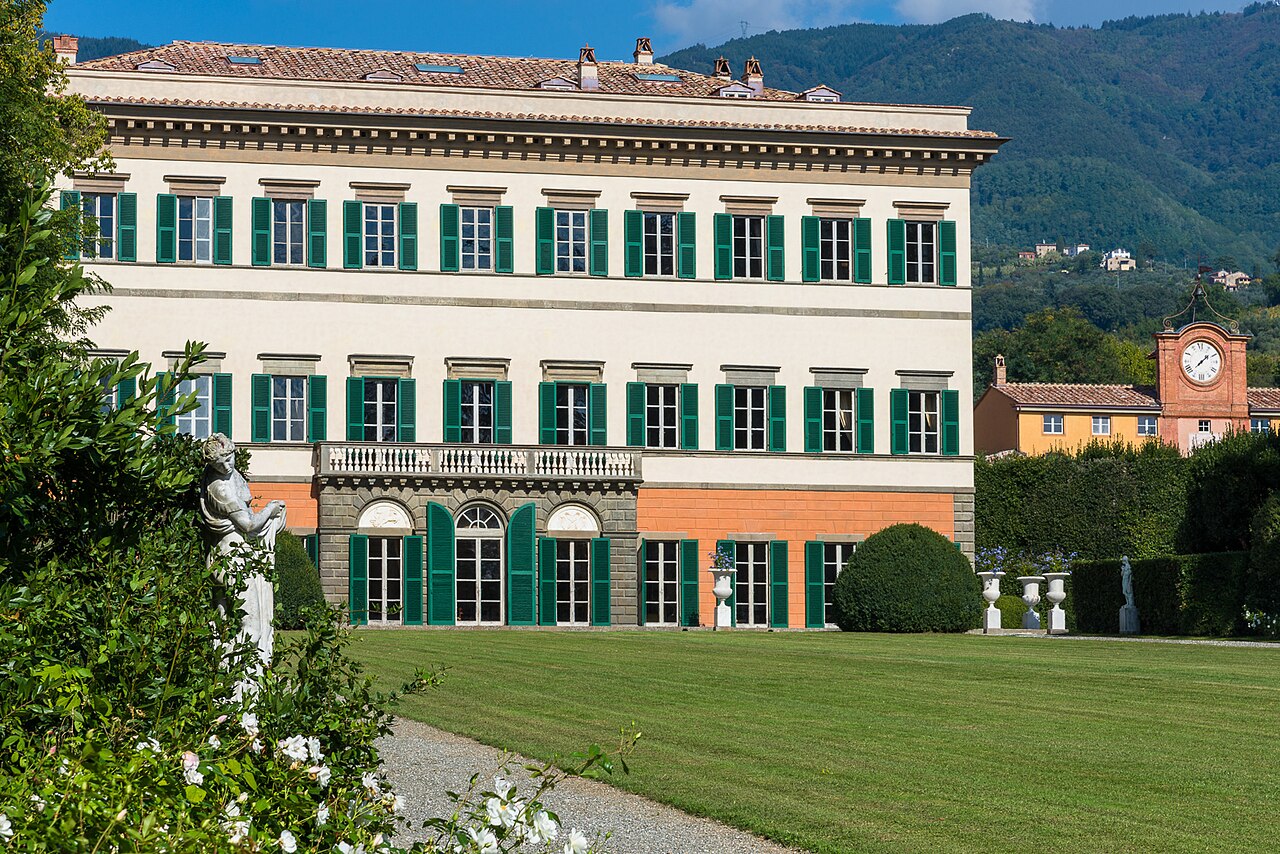
If you only visit one villa near Lucca, make it this one. Villa Reale di Marlia is the headliner. The main event. The one that makes garden nerds lose their minds — and the rest of us just stand there with our jaws open.
The gardens here are among the most extensive and varied in all of Tuscany, featuring a pond, a lemon garden, numerous statues and fountains, and — this is the star — a teatro di verzura. A theater made entirely of sculpted boxwood hedges. An outdoor performance space carved from living green walls. It’s one of the most iconic garden features in Italy, and when you stand inside it, you feel the weight of centuries of imagination and craft.
The villa also comes with a killer historical footnote. Napoleon’s sister, Elisa Baciocchi, lived here when she ruled Lucca in the early 1800s. She expanded and redesigned the estate, layering her own taste onto centuries of existing grandeur. So you’re walking through layers of history — Renaissance bones, Baroque drama, Napoleonic ambition — all in one garden.
Give yourself at least two hours here. More if you’re the type to sit on a bench and just soak it in. And if you’re into Lucca’s legends and curiosities, this place has stories for days.
Now we’re getting playful.
Villa Torrigiani — also known as Villa Camigliano, after the small hamlet where it was built — is the villa that makes you stop the car and reach for your camera before you even get to the front door. It stands out from other villas in Lucca and in Tuscany thanks to its multicolored facade, created through the use of different materials: stone, grey tuff, and yellow pillars and arches alternating in a pattern that’s bold, confident, and utterly unlike anything else around here.
The approach alone is worth the trip. A long, dramatic tree-lined avenue leads you straight to the villa — one of the most photogenic arrivals of any estate in Tuscany. You feel the anticipation building with every step.
But the real magic? The gardens. They were designed in classic Baroque fashion with giochi d’acqua — water games. Hidden jets designed to surprise and drench unsuspecting visitors. Imagine walking through a garden path and suddenly — splash. That was peak 17th-century entertainment, and honestly, it still works. The craftsmanship behind these water tricks is legit impressive, and they perfectly capture the playful spirit of Baroque garden culture.
Villa Torrigiani feels different from Villa Reale. Less refined grandeur, more theatrical swagger. Together, they give you two completely different sides of the Lucchese villa world.
Villa Mansi in Segromigno is the third big name, and it deserves every bit of attention. What makes it special? The layering. You’ve got formal Italian garden elements sitting right next to an English-style landscape park — rolling lawns, naturalistic plantings, the whole romantic deal. It’s like watching two centuries of garden fashion have a conversation.
Step inside the villa itself and you’re hit with frescoed interiors that’ll make your neck hurt from looking up. The contrast between the Baroque architecture and the softer, wilder parkland outside creates something genuinely unique. This is a villa that evolved, and you can feel every chapter.
But dai, there’s more. There are at least seven major historical villas within just minutes of Lucca’s city center, and each one has its own personality:
Here’s the best part: most of these estates are clustered in a small radius northeast of Lucca. You can hit two or three in a single day by car. Or — and this is my recommendation — by bicycle. The roads through the Lucchesia are flat, quiet, and gorgeous. These stately villas were built to be discovered one after another, and that rhythm of ride, arrive, explore, repeat is something else.
Ok so maybe you’re not heading to the countryside today. Maybe you’ve only got a few hours in town. No problem.
Palazzo Pfanner is right inside Lucca’s historic center, and it punches way above its weight. With its theatrical atmosphere, manicured hedges, graceful marble statues, and refined architecture, this garden delivers a concentrated hit of Baroque splendor without leaving the city walls.
What makes it really special is the integration. The garden sits perfectly framed by Lucca’s famous walls on one side and the bell tower of San Frediano on the other. It’s a scenic composition that feels almost designed for photographs — because, in a way, it was. Palazzo Pfanner even appeared in the Jane Campion film Portrait of a Lady. That kind of photogenic.
Think of Pfanner as your appetizer. Start here, get a taste of what these gardens are all about, and then head out to the countryside for the main course. It pairs perfectly with a stroll along the walls and a detour through some of the hidden gems inside Lucca’s city walls.
The garden is small but the impact is massive. Don’t skip it.
Alright, quick crash course. You don’t need a degree in landscape architecture to enjoy these places — but knowing a few key terms will make everything click into place.
Look for axes. The best Italian gardens are built along central sight lines — long perspectives that draw your eye from the villa through the garden to a focal point. A fountain. A statue. A view of the mountains. Everything is deliberate.
Pay attention to the element of surprise, too. Baroque gardens loved contrast — you’d walk from a tight, enclosed space into a sudden opening with a panoramic view. That theatrical quality you feel at Palazzo Pfanner? It’s baked into the design.
And notice how the styles layer. At Villa Mansi, you can literally walk from a formal Renaissance parterre into a romantic English landscape park. Ponds, lemon gardens, statues, fountains — each element tells you something about when it was built and what the owners wanted to say about themselves.
Water features and citrus collections were the ultimate status symbols. Controlling water meant engineering prowess. Growing lemons in Tuscany meant you had the resources to build glasshouses and employ gardeners year-round. Every detail was a statement.
Alright, let’s get you organized.
Most villas are just minutes outside of Lucca — we’re talking 10 to 20 minutes by car. The roads are easy, well-signed, and beautiful. If you’re feeling sporty, cycling is a killer option. The Lucchesia plains are flat, and pedaling between villas on a warm morning with the Apuan Alps in the background is one of those moments you don’t forget.
This is important. Many villas are only open from March or April through October. Some require advance booking for guided tours. Don’t just show up in January expecting to waltz in — check opening hours and book ahead, especially for Villa Reale. The ideal windows are April through June and September through October, when the gardens are in full bloom and the temperatures are perfect for spending hours outdoors. Check our guide on when to visit Lucca by season for more on this.
Half-day route (morning or afternoon): Start at Palazzo Pfanner in town. Then drive or cycle to Villa Reale di Marlia. Stop for lunch at a local trattoria in Marlia or Segromigno — the kind of place with paper tablecloths and pasta that changes your life. Then hit Villa Mansi or Villa Torrigiani before heading back.
Full-day immersion: Villa Reale in the morning. Villa Torrigiani before lunch. Find a spot for a garden picnic or a proper sit-down meal. Villa Mansi in the afternoon, with a detour to Villa Grabau if you’ve got energy left. Combine with an olive oil tasting at a nearby frantoio to round things out.
Multi-day combo: Lucca’s surroundings stretch from the Garfagnana valleys to the Tuscan coast, so you can easily pair a villa day with a day trip to the Garfagnana mountains or a morning at the beach. This is a region that rewards exploration, and the villas are just one piece of a much bigger picture.
Look, I know — “villa tour” doesn’t sound like something I’d normally pitch. I’m the nightlife guy, the aperitivo guy, the “meet me at the piazza at 8pm” guy. But these places? They’re electric in their own way. Standing in a 500-year-old garden, surrounded by sculpted hedges and the sound of hidden fountains, sunlight cutting through the cypress trees — it hits different.
These villas are Lucca’s history written in stone, water, and green. They’re the reason this city was one of the richest in Europe. And the fact that you can experience them without fighting crowds or paying Florence prices? That’s the real flex.
Dai, go see them. You won’t regret it.