This article includes AI generated content (text, images) obtained with Pressnaut. All content has been fact-checked and manually revised by an human editor.
In the heart of Tuscany, where millions of travelers flock annually to marvel at Renaissance masterpieces and rolling vineyards, finding a moment of authentic tranquility can feel like an impossible pursuit. Yet, enclosed within formidable brick fortifications, the city of Lucca remains a sophisticated sanctuary from the typical Tuscan tourist crowds. Unlike its bustling neighbors of Florence and Pisa, Lucca operates on a different frequency—one defined by the gentle hum of bicycles, the chiming of ancient bells, and the quiet pride of its local residents. The city’s unique enclosed geography has fostered an environment where mass tourism often grazes the perimeter, leaving the labyrinthine interior remarkably pristine for those willing to look closer.
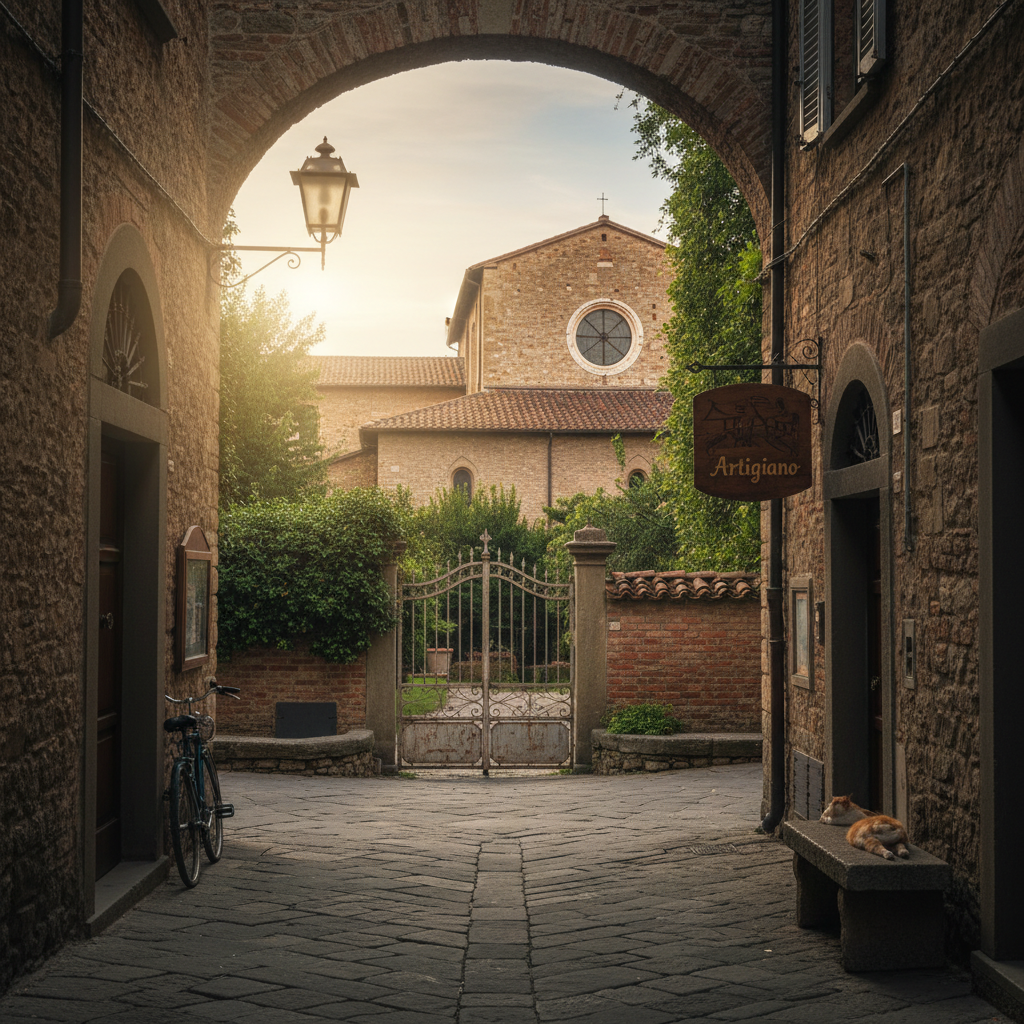
To truly understand Lucca, one must first acknowledge its profound historical foundations. Founded as a Roman colony in 180 BC, the city’s ancient grid layout still dictates the flow of its narrow, cobblestone streets today. It is widely celebrated as the only city in Italy where the monumental stone walls surrounding the historic center remain entirely intact. This architectural triumph did more than protect the city from military sieges; it preserved a distinct, fiercely independent local culture. When approaching Lucca from the perspective of a local guide, the objective shifts from rushing between major, heavily photographed landmarks to embracing the art of quiet exploration. True luxury in Lucca is found in the unhurried discovery of its hidden courtyards, silent chapels, and artisan workshops that have operated for generations.
The secret to unlocking the city’s magic lies in deliberate wandering. By intentionally stepping away from the main thoroughfares like Via Fillungo, mindful travelers can uncover a wealth of lesser-known historical and cultural sites. The following five hidden gems offer an authoritative roadmap to experiencing the authentic, undisturbed soul of Lucca.
In most European cities, the primary cathedral dominates the central square, serving as the inescapable focal point for every tour group and guidebook itinerary. Lucca, however, defies this convention brilliantly. The Duomo di San Martino (St. Martin Cathedral) is surprisingly tucked away in a quiet piazza near the southern walls, effectively hidden from the primary tourist arteries. For a city with so many churches, visitors are often surprised to learn that the city’s cathedral is a bit off the beaten path.
This geographical seclusion provides a stark, refreshing contrast to Lucca’s moniker as the City of 100 Churches. While the spectacular Chiesa di San Michele in Foro captures the attention of the crowds in the bustling center, St. Martin Cathedral offers a serene, contemplative retreat. The absence of a massive, congested plaza allows visitors to stand in quiet reverence before its stunning Romanesque facade. Without the pressure of elbowing through crowds, you can take your time examining the intricate, asymmetrical exterior details, including the fascinating medieval labyrinth carved into the right pier of the portico—a symbol believed to represent the arduous journey of faith.
Inside, the cathedral continues to reward the unhurried traveler. The vast, shadowy nave houses extraordinary treasures, such as the venerated Volto Santo (Holy Face) wooden crucifix and Jacopo della Quercia’s breathtakingly delicate marble tomb of Ilaria del Carretto. Exploring this magnificent religious site in relative solitude elevates the experience from a mere tourist checklist item to a profound encounter with Lucca’s spiritual and artistic heritage.
Lucca’s cultural identity is inextricably linked to its rich musical history, most notably as the birthplace of the renowned composer Giacomo Puccini. While his operas like La Bohème, Tosca, and Madama Butterfly are celebrated globally in grand, opulent opera houses, the origins of his genius are remarkably humble and intimate. Tucked away in the unassuming Piazza della Cittadella, marked only by a contemplative bronze statue of the maestro, lies the Casa di Puccini.
Unlike the sprawling, crowded museums dedicated to other historical figures, visiting this modest apartment feels akin to being invited into a private home. The Casa di Puccini provides a fascinating, deeply personal look into his early life and monumental works. As you walk through the rooms where he was born and raised, you can examine original musical scores, personal letters, and the very Steinway piano on which he composed Turandot. The museum’s quiet atmosphere allows for a profound, unhurried connection with the local cultural history, free from the distraction of large tour groups.
To fully honor Puccini’s legacy like a local, avoid the heavily marketed, large-scale tourist concerts that often dominate the summer schedules. Instead, seek out small, localized evening music performances. Many of Lucca’s deconsecrated churches and hidden cloisters host intimate recitals featuring local musicians and conservatory students. These quiet, acoustic performances capture the true, enduring musical spirit of the city, offering an enchanting end to a day of exploration.
To experience the authentic culinary soul of Lucca, one must consciously steer away from the prominent restaurants lining the main piazzas, which often cater to international palates. The city’s true gastronomic treasures are hidden within its centuries-old cafes and unassuming trattorias favored exclusively by locals. These establishments, often characterized by dark wood paneling, tarnished mirrors, and the rich aroma of espresso, serve as the epicurean lifeblood of the city.
Embracing the region’s slow-food culture means seeking out dishes that reflect the rustic, agricultural history of the surrounding Garfagnana valley. One of the most unusual and highly traditional local foods to try is castagnaccio. This dense, unleavened cake is uniquely crafted from chestnut flour, water, olive oil, pine nuts, rosemary, and raisins. Lacking refined sugar, its earthy, slightly smoky flavor profile is a far cry from typical Italian pastries, offering a genuine taste of historical peasant ingenuity.
For a more substantial immersion into the local diet, step inside a quiet, dimly lit osteria for a traditional meal. Sitting down to a comforting bowl of farro soup in a centuries-old cafe makes dining in Lucca nothing short of magical. Farro, an ancient grain cultivated in the nearby hills for millennia, is simmered slowly with borlotti beans, seasonal vegetables, and a generous drizzle of robust, peppery local olive oil. This simple yet profoundly flavorful dish forces you to slow down, savor each spoonful, and appreciate the unpretentious elegance of authentic Lucchese cuisine.
When visitors look to the Lucchese skyline, their eyes are inevitably drawn to the iconic Torre Guinigi, famous for the cluster of holm oak trees sprouting remarkably from its summit. Consequently, it is the tower that draws the longest queues and the thickest crowds. For the discerning traveler seeking a superior, uncrowded vantage point, the true hidden gem lies a short walk away at the Torre delle Ore (The Clock Tower).
As the tallest tower in the city, the Torre delle Ore serves as a magnificent bell tower overlooking the entire medieval landscape. Climbing its 207 original wooden steps is a visceral journey through time. Along the ascent, visitors can pause to observe the intricate, still-functioning 18th-century hand-wound clock mechanism—a marvel of historical engineering that continues to dictate the rhythm of the city.
Emerging at the top, you are rewarded with an uninterrupted, 360-degree panorama of terracotta rooftops, hidden courtyard gardens, and the distant, jagged peaks of the Apuan Alps. Because it is frequently bypassed by standard guided tours, the Torre delle Ore offers a remarkably peaceful atmosphere. It is undoubtedly one of the finest locations in the city for photography enthusiasts who desire panoramic views of the city without having to jockey for position. Standing beside the massive bronze bells as the wind sweeps across the valley, you gain a breathtaking, solitary perspective on the city’s flawless medieval geometry.
No exploration of Lucca is complete without experiencing its defining architectural feature: the monumental Renaissance walls. However, the typical visitor’s experience is often limited to renting a bicycle near the bustling Porta San Pietro and navigating through congested pathways filled with wobbly tourists and quadricycles. To discover the true magic of this defensive masterpiece, one must venture out to its quietest, most secluded stretches.
The sheer scale of the fortifications makes finding solitude entirely possible. These perfectly preserved, fortified walls form a continuous 4.2 km loop with a broad, tree-lined promenade. By moving away from the main access ramps and heading toward the northern and eastern bastions (such as Baluardo San Martino or Baluardo San Salvatore), the crowds rapidly dissipate. Here, the massive defensive loop transforms into a serene, elevated park.
These tranquil sections offer ample space to find a private, shaded bench beneath ancient plane and chestnut trees, or to enjoy a quiet walking path accompanied only by the sound of rustling leaves and distant birdsong. The bastions themselves, originally designed to house heavy artillery, are now lush, grassy knolls perfect for a solitary afternoon of reading or reflection. It serves as a beautiful concluding reminder that in Lucca, escaping the beaten path rarely requires a map; it simply requires the willingness to walk a few extra minutes along its ancient, sheltering embrace.