This article includes AI generated content (text, images) obtained with Pressnaut. All content has been fact-checked and manually revised by an human editor.
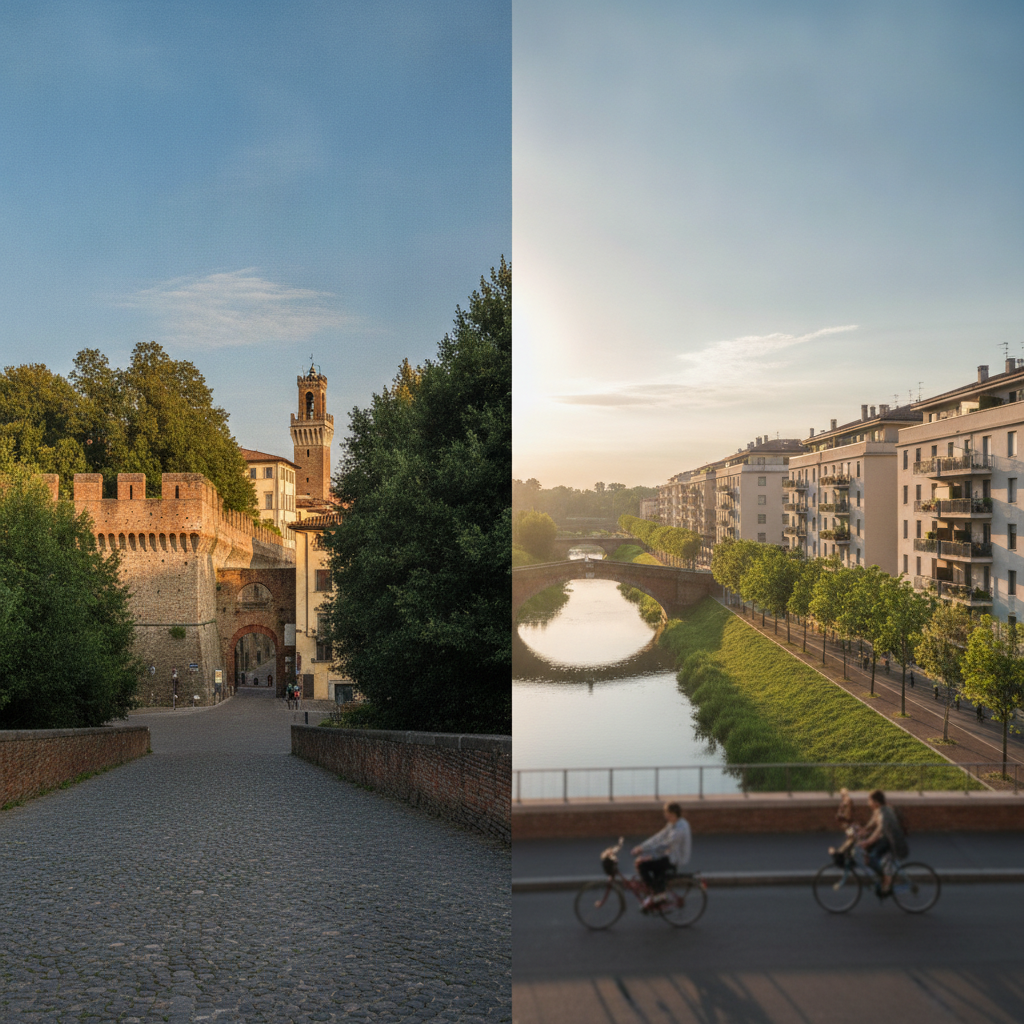
The walls of Lucca are not merely a historical artifact; they are a logistical threshold. In many Italian cities, the transition from modern infrastructure to ancient preservation is gradual, a slow narrowing of streets and a gradual aging of facades. In Lucca, the division is absolute. You are either inside the sixteenth-century brick ramparts, or you are outside them. This singular geographic fact dictates the entire rhythm of your stay, making the choice of where to sleep less about thread counts and more about how you intend to move through the days.
I once watched a concierge at a small, highly regarded property just inside Porta San Pietro quietly dispatch a porter with a brass luggage cart to intercept a guest’s vehicle outside the gates. The guest had missed the email warning about the city’s strict ZTL (Limited Traffic Zone) regulations. The porter guided the car to a safe legal spot, unloaded the bags, and walked the guests across the threshold. That is hospitality as a discipline—anticipating the friction of travel and removing it before the guest even realizes they have made an error. Your mode of transportation should always be the primary deciding factor here. Train travelers thrive inside the walls, stepping directly from the station into the pedestrian-friendly core. Drivers, however, face a complex web of restrictions that can quickly turn an arrival into an expensive administrative nightmare. For those arriving in Lucca from Florence by train or car, understanding this boundary is the first step in calibrating the experience.
Defining your itinerary will help you choose the best neighborhoods in Lucca for your specific travel style. According to property market analyses of the region, the historic center of Lucca, known for its beautiful architecture, cobblestone streets, and rich history, remains the primary zone for short-term rentals and boutique hospitality. But the center is not a monolith, and the immediate outskirts offer their own distinct, quieter appeal. The decision requires an honest assessment of what you value more: the immediate, tactile proximity to history, or the seamless, unbothered logistics of a modern basecamp.
To stay inside the walls—the Centro Storico—is to accept the terms of a centuries-old environment. It is an incredibly immersive, walkable experience right next to major monuments, but it demands a certain physical resilience. The cobblestones are unforgiving to poorly made luggage, and the narrow streets trap both the heat of the afternoon sun and the damp chill of a Tuscan morning. Yet, there is a distinct, undeniable weight to the air here. The beauty is in the patina: the worn stone steps of a palazzo, the heavy timber of a centuries-old door, the smell of beeswax polish and espresso that drifts through the ground floors of respected boutique hotels.
This area is ideal for those who want to step out of their hotel directly into the lively atmosphere of ancient piazzas. There is a specific kind of luxury in waking up, walking down a flight of uneven terracotta stairs, and finding yourself immediately immersed in the morning rituals of the city. It is a major attraction for tourists looking to explore ancient churches and cultural landmarks without the barrier of a commute. When the weather turns, there is a profound comfort in simply ducking into cozy cafes during a rainy day, knowing your room is only a few pedestrian streets away.
However, the logistical reality of the Centro Storico must be acknowledged. Navigating luggage over uneven surfaces and coordinating ZTL passes with your hotel requires a property with highly competent staff. When evaluating a hotel inside the walls, I look at their pre-arrival communication. Do they send a vague welcome email, or do they provide precise, actionable instructions on where to leave your vehicle and how they will handle your bags? Genuine hospitality does not pretend the inconvenience doesn’t exist; it manages the inconvenience on your behalf. If you are a traveler who prefers the autonomy of a rental car and frequent excursions, the friction of the Centro Storico may eventually wear thin.
There is a distinct elegance in pragmatism. For travelers who view Lucca as a basecamp rather than a closed ecosystem, the neighborhoods immediately bordering the exterior of the walls offer a calibrated compromise. Here, hospitality involves seamless transitions. You can easily keep a rental car for regional exploration without the daily anxiety of navigating a medieval street plan or risking a traffic citation.
The properties in this transitional zone understand their purpose. They cater to a guest who values time and ease. You can walk to the historic gates in ten to fifteen minutes, crossing the wide, tree-lined avenues that encircle the walls, moving from the modern world into the historic center at your own pace. When you return, you return to a space that is unburdened by the architectural constraints of the sixteenth century. Accommodation here tends to feature more modern amenities, larger rooms, reliable climate control, and, crucially, private parking lots. The luxury here is found in the lack of friction.
This area is particularly suited for those planning extensive regional travel. The ability to pull out of your hotel’s driveway and be on the Autostrada in minutes is an undervalued amenity. Whether you are heading into the Garfagnana mountains or taking a beach day trip to the Versilia Coast, the immediate outskirts serve as the perfect launchpad. Travel experts noting our recommendations for the best places to stay in Lucca, Italy, frequently highlight this perimeter zone as the most practical choice for those who refuse to compromise on either mobility or proximity. It is a quiet, operational efficiency that respects the guest’s time—a fundamental pillar of good service.
Move further out from the immediate perimeter, and the rhythm of the city slows entirely. The broader outskirts of Lucca—neighborhoods like Sant’Anna, San Concordio, and the rolling foothills leading toward the villas—offer a deeply authentic, quieter Italian lifestyle. This is lived-in luxury. It is not the manicured perfection of a hotel lobby, but the honest, daily routine of a functioning community.
For longer stays or slow travel, these residential neighborhoods are unmatched. They are highly popular among the city’s established expat community, offering access to larger villas, expansive gardens, and genuine local markets where the vendors are not catering to passing tourists. When examining local demographics, researchers used municipal demographic data from ISTAT Demo to anchor foreign-resident counts, supplemented by community insights, revealing a strong preference among long-term international residents for the space and quiet of the outskirts. Here, you are not a spectator to history; you are a temporary participant in the contemporary life of the region.
Staying in the outskirts provides a fantastic base for those who prefer to move at a deliberate pace. It is ideal for cycling into the center along dedicated paths, or for exploring nearby wine villages like Montecarlo without ever dealing with city traffic. The hospitality in these areas often takes the form of independent rentals or small, family-run bed and breakfasts where the attentiveness is deeply personal. A host in the outskirts might leave a small, unlabeled jar of regional honey on your table simply because you mentioned an interest in local agriculture the day before. That unrequested gesture, that quiet listening, is the true mark of a welcoming culture. It is a reminder that genuine warmth cannot be trained into a staff; it must be inherent to the environment.
The landscape of accommodation in Lucca is broad, requiring a discerning eye to separate genuine craft from mere aesthetic appeal. The city offers a wide spectrum of lodging, from historic palazzo boutique hotels inside the walls to spacious apartment rentals in the outskirts. Selecting the right property depends entirely on your budget and your tolerance for the idiosyncrasies of Italian infrastructure. Excellent options are available across all price tiers, provided you know what questions to ask before securing a reservation.
Industry evaluations have identified 8 Best Hotels in All Price Ranges that serve as ideal bases for exploring the city, demonstrating that value at the top end is not always about the highest price, but about the highest level of intention. A well-run three-star hotel where the staff understands the mechanics of the city and anticipates your needs will always outshine a disorganized five-star property relying solely on its frescoed ceilings. When booking a hotel, I look for restraint. I look for a property that does not need to shout about its amenities, but rather executes the fundamentals flawlessly.
Alternatively, the independent rental market offers a different kind of autonomy. Recent analyses of the Airbnb Data 2026: Occupancy, Revenue & STR Market Report indicate a robust supply of short-term rentals for those preferring apartments over hotels. A rental offers the luxury of space and the ability to engage with local food markets on your own terms. However, this autonomy comes with responsibility. You must always confirm specific amenities. Do not assume air conditioning is standard. Do not assume a historic building has an elevator—they are exceptionally rare, and dragging luggage up four flights of steep stone stairs will quickly diminish the romance of a sixteenth-century apartment. Whether you are seeking a central palazzo or planning a wellness day trip to Bagni di Lucca from a quiet villa on the outskirts, the key to a successful stay is aligning your accommodation with your operational needs. The charm of Lucca is everywhere; the trick is finding a place that allows you to experience it without unnecessary friction.