This article includes AI generated content (text, images) obtained with Pressnaut. All content has been fact-checked and manually revised by an human editor.
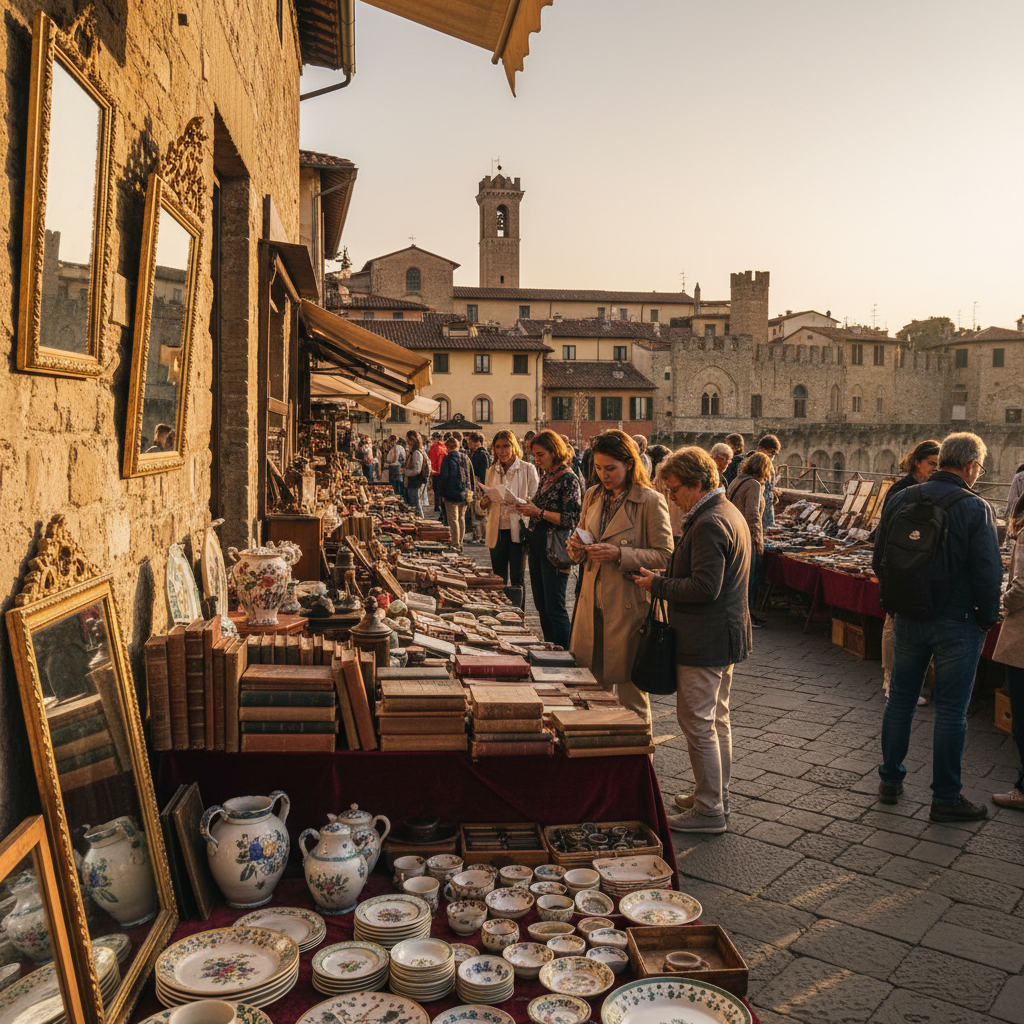
Imagine stepping into a time machine, but instead of a sci-fi contraption, it’s a sun-drenched Italian piazza surrounded by medieval walls. That is exactly what happens when you visit Lucca during the third weekend of the month. The city, already famous for its charm and history, transforms into a bustling open-air museum where the past is literally up for sale.
If you are planning a 48-hour itinerary in Tuscany, timing your trip to coincide with this event is a stroke of genius. The Lucca Antique Market is not just a collection of old tables and chairs; it is an institution. Established in 1920, it is the second oldest antique market in Italy, boasting a longevity that speaks to its quality and reputation.
As you wander through the cobbled streets, you aren’t just looking at merchandise; you are walking through history. According to local experts, this event has become a major Italian fixture, attracting over 200 exhibitors from across the country (source). Whether you are a serious collector looking for a 17th-century chest or a casual traveler hoping to find a vintage postcard, the atmosphere is electric.
The visual appeal is undeniable. As noted by visitors who have captured the scene, once a month, the historic center turns into a magical landscape where sun-soaked piazzas are filled with treasures (source). It is the perfect introduction to the slow, deliberate pace of life in Lucca.
To truly appreciate the market, you have to understand the city hosting it. Lucca has always been a city of merchants. Unlike some Tuscan neighbors who focused heavily on military might, Lucca built its power on silk, banking, and trade. This commercial DNA is still very much alive today.
The antique market is a modern reflection of a very old tradition. Lucca’s roots in the antique trade go back much further than the 1920s. The tradition dates back to the Middle Ages when noble families, who frequented the city and built the stunning palazzos you see today, would sell their furniture and goods (source).
When you pick up a heavy brass candlestick or run your hand over a walnut table, you are connecting with the artisan soul of Lucca. The exhibitors here aren’t just salespeople; many are second or third-generation dealers who can tell you the story behind every scratch and patina on their wares. It is this depth of history that separates the Lucca market from a standard flea market. You are browsing the cast-offs of nobility and the heirlooms of a wealthy merchant class.
One of the most common mistakes travelers make is getting the dates wrong. So, let’s be crystal clear: The Lucca Antique Market takes place every third weekend of the month. This includes both Saturday and Sunday (source).
Lucca is a labyrinth of beauty, but the market is concentrated in a specific area, making it relatively easy to navigate once you know where to start. The stalls snake through the southern part of the historic center, creating a dedicated path for treasure hunters.
The heart of the action is usually around the Duomo (Cathedral). From there, the stalls spread out into several key locations:
According to local guides, these specific piazzas and streets form the core route of the market (source). If you stick to this circuit, you won’t miss a thing.
Now for the fun part: the shopping. The sheer variety of items can be overwhelming, so it helps to have a game plan. Because the market attracts over 200 exhibitors, the inventory ranges from museum-quality pieces to fun, affordable vintage items.
If you are a serious buyer, Lucca is a goldmine. The dealers here bring out their best stock. You can find:
For those of us who can’t fit a wardrobe in our carry-on luggage, there are plenty of smaller treasures. The market is famous for its wide selection of high-quality items including jewelry and textiles (source).
Keep an eye out for:
While the market runs all weekend, there is something special about Sunday mornings. The pace is slightly more relaxed, locals are out for their post-church stroll, and the light is often perfect for photography.
Sunday morning at Lucca’s Antique Market offers a distinct vibe (source). It feels less like a commercial event and more like a community gathering. It is widely considered a perfect weekend stop if you are visiting the city (source).
If you are visiting Lucca with kids, the market is surprisingly family-friendly. Because Lucca’s center is largely pedestrian, you don’t have to worry about traffic. The piazzas are wide enough for strollers, though they can get crowded by midday.
Pro Tip: Go early (around 9:00 AM) or during the Italian lunch hour (1:00 PM – 2:30 PM). The crowds thin out while everyone is eating pasta, giving you better access to the stalls and the dealers’ attention.
After a few hours of hunting for treasures, you will likely need a break. The beauty of the market’s location is that it places you in the center of everything. Since the stalls are set in the historical streets near the cathedral and extend through Piazza Antelminelli (source), you are steps away from major landmarks.
Why not combine your shopping trip with a cultural deep dive? You are right next to the places that celebrate Puccini’s musical heritage. Taking a moment to sit in a piazza where the great composer might have walked adds a layer of romance to your antique finds.
Finally, as the sun starts to dip and the vendors begin packing up their crates, treat yourself. You’ve walked miles, haggled in broken Italian, and secured a piece of history. It is definitely time to consult our aperitivo guide and find a spot to toast to your successful treasure hunt. Whether you bought a diamond ring or just a dusty old book, the real souvenir is the memory of the search in one of Italy’s most beautiful cities.