This article includes AI generated content (text, images) obtained with Pressnaut. All content has been fact-checked and manually revised by an human editor.
If you have already rented your bike to cycle the walls, tasted the savory tordelli lucchesi at a local trattoria, and explored the magnificent villas in the countryside, you might think you have seen the best of Lucca. But there is a deeper layer to this city, one that hides in the quiet ripple of its canals and echoes in the notes of an opera aria drifting from an open window. To truly enjoy Tuscany as a local, you need to understand the industrious and artistic heart that has beaten within these walls for centuries.
Lucca is not just a city of merchants and bankers; it is a city of makers, musicians, and storytellers. While the stone walls protected the city from enemies, the people inside were busy creating wealth through silk, composing masterpieces that would conquer the world, and preserving legends that defy explanation. This guide invites you to slow down and explore the cultural heritage of Lucca, moving beyond the postcard views to discover the artisan soul of the city.
Walking through the eastern part of the historic center, you will stumble upon a picturesque, tree-lined canal running through the street. This is Via del Fosso, and it is the key to understanding why Lucca became such a wealthy and independent republic. While today it serves as a charming backdrop for photos, this canal was once the industrial engine of the city.
From the Middle Ages until the 18th century, Lucca was one of the silk capitals of Europe. The water flowing through Via del Fosso powered the mills that spun raw silk into the luxurious fabrics worn by kings and popes across the continent. It wasn’t just a business; it was an art form that defined the city’s identity. The aristocracy of Lucca built their fortunes—and their magnificent palazzos—on these delicate threads.
As you stroll down Via del Fosso today, look closely at the architecture:
Although the industrial looms are long gone, the spirit of fine craftsmanship remains. You can still find boutiques in the city center selling high-quality Tuscan textiles, a modern nod to a centuries-old tradition. Understanding this history changes how you see the city; you aren’t just looking at old buildings, but at the remnants of a medieval industrial powerhouse.
You cannot visit Lucca without feeling the presence of Giacomo Puccini. Born here in 1858, the composer of La Bohème, Tosca, and Madama Butterfly is Lucca’s most famous son. For music lovers, Lucca is a pilgrimage site, but even if you aren’t an opera aficionado, following Puccini’s footsteps offers a fascinating glimpse into the city’s 19th-century life.
Start your journey at the Puccini Museum – Birthplace located in Corte San Lorenzo. The apartment where he was born has been meticulously preserved. Seeing the piano where he composed his early works and reading his handwritten letters adds a deeply human element to the musical legend. It is a small, intimate museum that feels more like visiting a home than an institution.
“I always carry with me a great nostalgia for my land, for my Lucca.” – Giacomo Puccini
After the museum, head to Piazza Cittadella to see the bronze statue of the maestro. Unlike many stiff historical monuments, this statue depicts Puccini sitting casually, cigarette in hand, looking as if he is people-watching. It is a favorite spot for a photo, but take a moment to look around. This is the neighborhood where he played as a child and studied music.
To truly experience his legacy, you must hear his music. Lucca is unique because it hosts the Puccini e la sua Lucca festival—the only permanent festival in the world dedicated to the composer. Every single evening of the year, at the Church of San Giovanni, professional singers and pianists perform selections from his operas. It is an informal, emotional, and accessible way to end your day, letting the soaring notes of “Nessun Dorma” fill the ancient acoustics of the church.
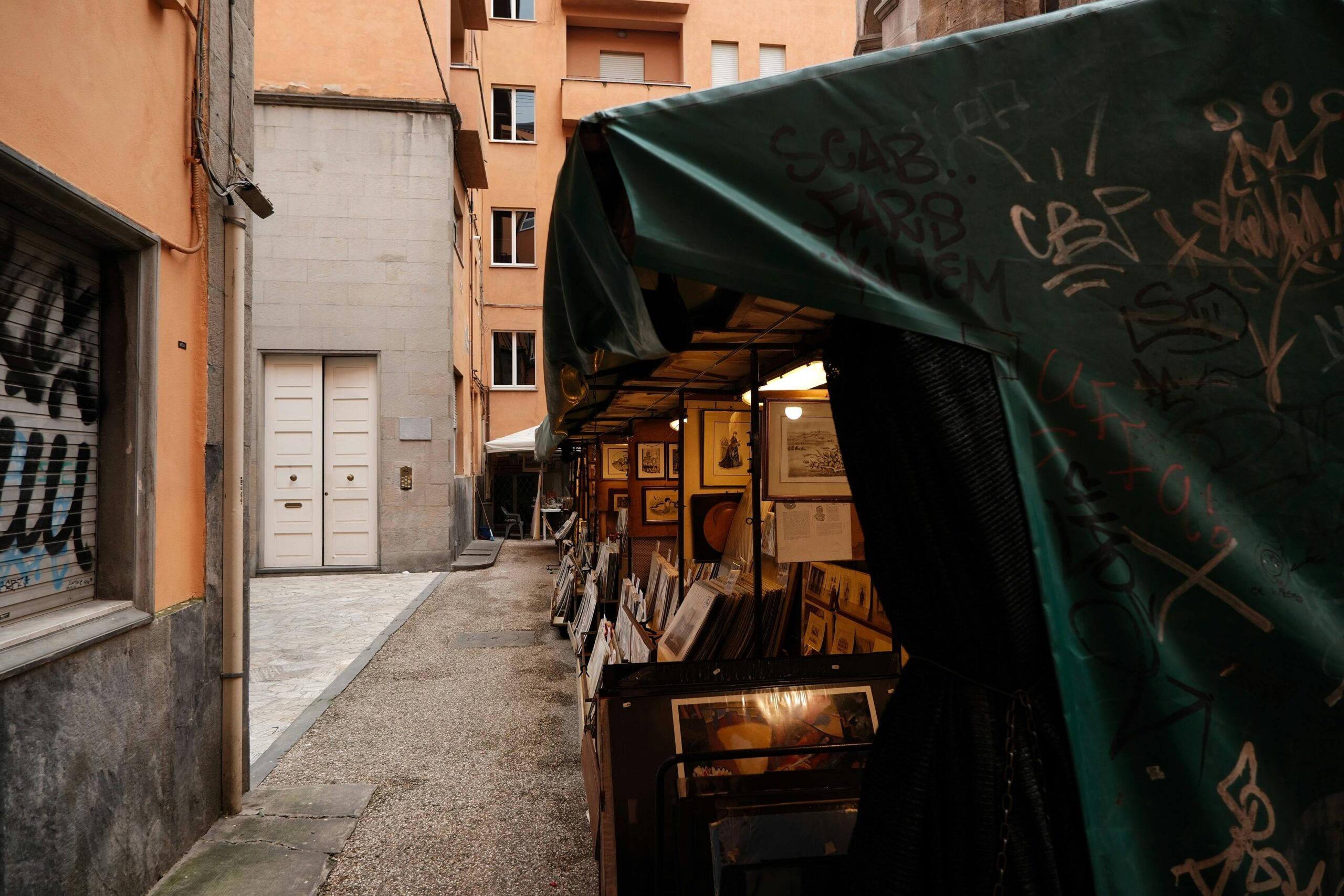
If your visit aligns with the third weekend of the month, you are in for a spectacular treat. Lucca hosts one of the most important antique markets in Italy. This is not a typical flea market with knick-knacks; it is a sprawling, high-quality exhibition that takes over the streets and piazzas around the Cathedral of San Martino and Piazza Antelminelli.
The atmosphere is electric. Over 200 exhibitors set up their stalls, displaying everything from 18th-century furniture and Renaissance-style paintings to vintage jewelry and war memorabilia. It is a paradise for collectors, but it is equally enjoyable for a casual stroll.
Even if you cannot fit a heavy oak wardrobe in your suitcase, there are plenty of smaller treasures to hunt for:
The market transforms the city into a living museum. Locals spend hours here, discussing the provenance of items with dealers or simply enjoying the visual chaos of history spilled out onto the cobblestones. It is a perfect example of the slow, appreciative pace of life in Lucca.
While the Duomo di San Martino is a masterpiece of architecture, it houses something far more intriguing than just marble columns: the Volto Santo (Holy Face). This ancient wooden crucifix is the spiritual protector of Lucca and the subject of one of Europe’s most fascinating legends.
According to the story, the crucifix was carved by Nicodemus, who helped bury Jesus. He fell asleep while carving the face, and when he woke up, the face had been miraculously completed by angels. The crucifix arrived in Lucca in the 8th century on a driverless ship, further cementing its miraculous nature. Recent scientific carbon dating has actually confirmed that it is the oldest surviving wooden statue in the West, dating back to the early 9th century, making it a true historical wonder.
If you visit in September, you can witness the Luminara di Santa Croce. On the evening of September 13th, the entire city turns off its electric lights. The streets, the outline of the buildings, and the city walls are illuminated by thousands of wax candles. A solemn procession walks through the flickering city to pay homage to the Volto Santo. It is a magical, almost medieval experience that you will never forget.
While silk was the industry of the past, paper is the industry of the present. The province of Lucca is the most important paper production district in Europe. But we aren’t talking about industrial tissue paper here; we are talking about a deep cultural connection to paper as a medium for art.
This heritage is celebrated every two years with the Lucca Biennale Cartasia, an event dedicated to paper art, design, and architecture. During this time, massive monumental sculptures made entirely of paper and cardboard appear in the city’s piazzas. These works are often incredibly durable, challenging our perception of paper as a fragile material.
For a hands-on experience, seek out the artisan bookbinders and paper shops in the city center. Shops like Antica Tipografia Biagini preserve the art of traditional printing. You can find hand-bound journals, marbled paper, and fountain pens that bring the romance back to writing. Buying a leather-bound notebook here feels like acquiring a tool for your own creativity, inspired by the literary history of the city.
To wrap up your cultural itinerary, you might want to take a piece of Lucca’s artisan soul home with you. Avoid the mass-produced souvenir shops and look for the botteghe (workshops) that still produce goods by hand. The area around Via Chiasso Barletti is a hidden gem for this.
This narrow, medieval alley was once the heart of the city’s trade. Today, it is undergoing a revival with small independent shops opening up. Here and in the surrounding streets, you can find:
When you step into these shops, you aren’t just a customer; you are a guest. The artisans are usually happy to explain their process, show you their tools, and tell you the story behind the object. This interaction is the essence of “slow travel.”
Lucca is a city that rewards curiosity. While it is easy to see the main sights in a day, understanding its artistic and industrial heritage takes a little more time. Try to allocate at least one full day to this “cultural” side of the city.
Start your morning with a coffee at Caffè Di Simo on Via Fillungo, another haunt of Puccini, where the Art Nouveau decor sets the mood. Walk the canal of Via del Fosso before lunch. Spend your afternoon hunting for antiques or visiting the workshops, and end your day with the Puccini concert at San Giovanni. By doing so, you engage with the city not just as a tourist attraction, but as a living, breathing center of creativity and history.