This article includes AI generated content (text, images) obtained with Pressnaut. All content has been fact-checked and manually revised by an human editor.
Picture the moment. You’ve landed, the bag belt has done its slow humiliation, and you’re standing in an arrivals hall in a country where you don’t read the signage fluently. You have one question, and it isn’t “what’s the most charming way to reach Tuscany.” It’s: which door do I walk out of, and does it cost me an hour or a hundred euros?
So let’s answer that first, and explain afterwards. Lucca is unusually easy to reach — it sits on a regional rail line with frequent service, and its station is a five-minute walk from the walls. The complications are almost entirely a matter of which airport you chose.
Three arrival points, three realistic profiles:
Pisa is, by a wide margin, the most convenient gateway. And across all three, the train is the simplest and easiest way to get to Lucca. Taxis and private transfers are not the default; they’re the exception you reach for when the timetable has abandoned you, or when you’re travelling with four bags and two tired children.
This is the route I’d give a first-timer without hesitation, because every leg is short and every leg is signposted.
Turn left when you exit arrivals. The PisaMover — an automated people-mover, not a bus — is at the end of the terminal, and it runs the short hop to Pisa Centrale in about five minutes. Invitation to Tuscany describes exactly this sequence, and it’s worth trusting: there is no clever shortcut past it.
You can buy a combined PisaMover + regional rail ticket, or buy them separately at the machines. Either way, note the discipline that catches out almost every newcomer: regional tickets must be validated in the small green-and-white (older ones: yellow) stamping machine on the platform before you board. An unvalidated paper ticket is treated as no ticket, and the fine is not a warm conversation. Digital tickets bought in-app are exempt, because the app timestamps them for you.
The train takes 25–30 minutes and costs about €3.40, with frequent departures through the day, per this Pisa–Lucca transfer guide. It’s a local service: no reservations, no assigned seats, and luggage goes in the racks or between your knees.
Pisa Centrale is a terminus station with a pedestrian underpass, and not every platform has a working lift. If you’re hauling a large hard case down and up stairs, add five minutes and a little patience to your mental timetable. Travellers on the Rick Steves forum ask this exact question constantly — usually phrased as “I need to get to my apartment in central Lucca (inside the wall)” — and the answer is reassuring: the hard part is Pisa station, not Lucca.
The route works beautifully in reverse, too, which is why a Lucca to Pisa day trip is one of the easiest half-days in Tuscany.
Sometimes the train is the wrong answer, and it’s worth being honest about when.
A direct shuttle takes 35–50 minutes and costs €10–€20 per person, or €40–€70 for the whole vehicle, with booking recommended in advance. Those numbers matter because they change the decision arithmetic: for one traveller, a shuttle is triple the train fare for marginal convenience. For a family of four, a €50 vehicle rate versus four tickets plus two people-mover fares plus a station staircase starts to look like money well spent.
Reach for a pre-booked transfer when:
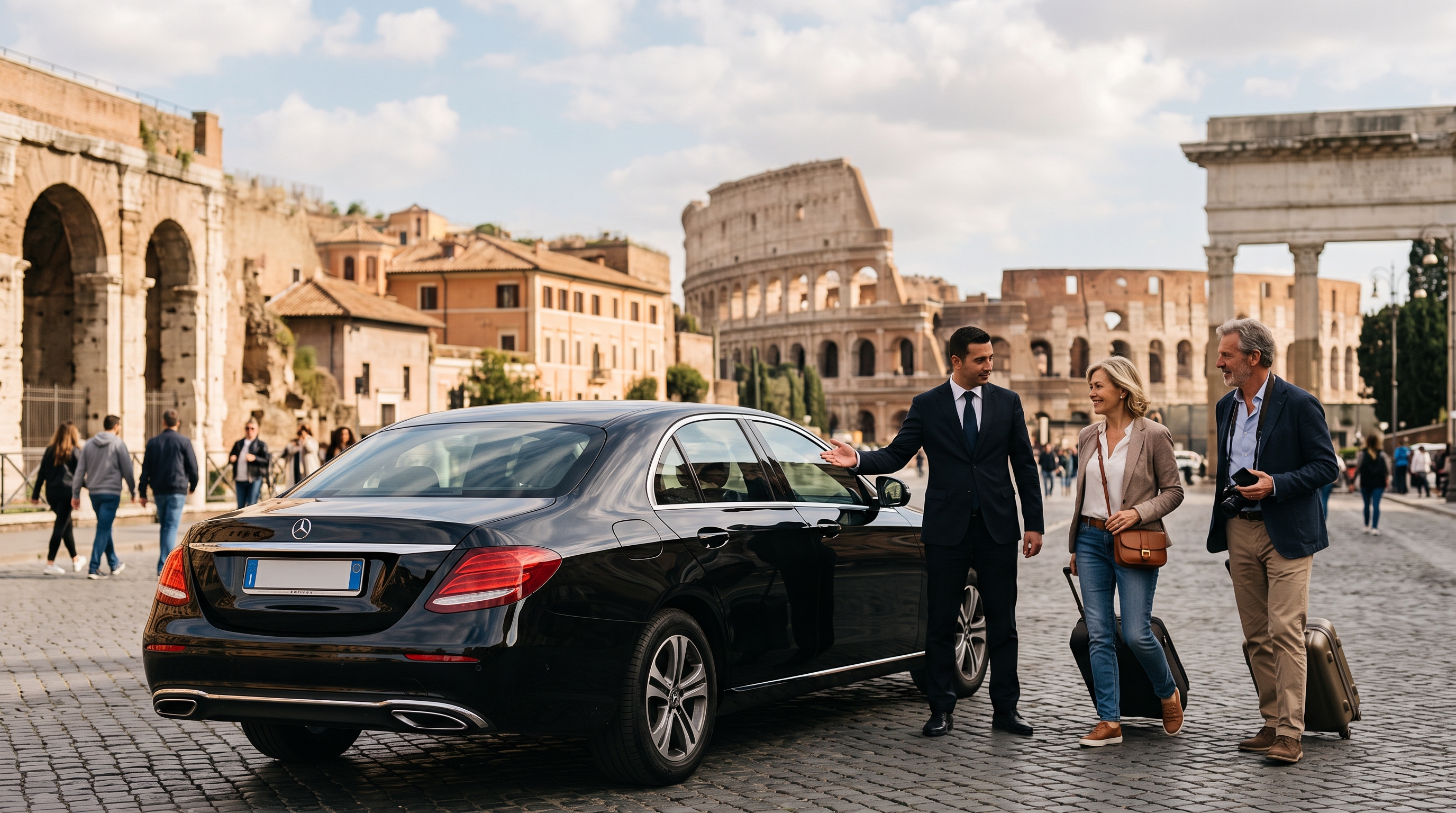
Book it before you fly. A driver holding a sign with your name at midnight is worth more than the €15 you saved by improvising.
Florence is the second-best gateway, and it’s perfectly manageable — it just costs you an extra hour.
The T2 tram runs from the airport terminal to right outside Santa Maria Novella station. As one forum regular puts it, “it costs less than €2 and plenty room for luggage” — which is the detail that matters, because low-floor trams are far kinder to suitcases than a crowded airport bus. Cross the street to SMN and take the regional train onward; Florence to Lucca runs about 1h20.
Total: under €2 for the tram plus around €8–€10 rail, call it two hours from baggage claim to the walls.
They exist. FlixBus and stopover connections between Florence Airport and Lucca are listed on CheckMyBus, but the schedules are thin and seasonal. Treat coach travel as opportunistic: if a departure happens to align with your landing, take it; don’t plan your arrival around one.
Here’s the number that ends most debates. A standard van from Florence Airport to Lucca runs about €313.67, and a minibus for up to twelve passengers about €878.28, following the A11 motorway, according to Transfeero. Divided across a group of twelve, €878 is €73 a head. Divided across two people, €313 is an indefensible way to skip a tram ride.
There’s no direct high-speed service into Lucca, so the structure is always the same: a fast train north, then a regional connection.
From Roma Termini, take Frecciarossa or Italo to either Firenze Santa Maria Novella (about 1h30) or Pisa Centrale (about 2h40 on the coastal/Frecciabianca routing), then the regional train onward. Total door-to-door: 3.5 to 4 hours.
My structural advice: change at Pisa Centrale rather than Florence SMN if you have luggage. Florence SMN is a larger, busier terminus with longer platform walks and denser crowds; Pisa is smaller, and the Lucca departures are usually a short walk away. Fewer metres with a case in each hand is a real improvement, not a stylistic preference.
Book the high-speed leg as soon as your dates are fixed. Italian operators price dynamically, so the same Rome–Florence seat can swing from about €20 to €90 depending on how late you commit. The regional leg into Lucca never needs advance booking — buy it on the day.
And once you’re settled, that same rail hub opens up the coast: a day trip to Cinque Terre by train is entirely feasible from Lucca.
This is the leg everyone worries about and almost nobody needs to. Lucca station sits just outside the southern walls, roughly a five-minute walk from the historic centre.
Exit the station, cross the small square, and head for Porta San Pietro — the monumental gate directly ahead. Through the arch, you’re inside. The only friction is the surface: Lucca’s centre is cobbled and paved in stone, and cheap suitcase wheels have a short, loud life here. Two-wheel cases you tilt and pull handle it better than four-wheel spinners.
There’s a taxi rank outside the station for heavy bags, mobility needs, or the simple case of arriving in a downpour. Expect a short-hop fare; the distances inside the walls are trivial.
Two things. First, both Lucca motorway exits are about 1 km from the city centre, so the final approach is short. Second, and more importantly: the historic centre is a ZTL — a limited-traffic zone monitored by cameras. Driving in without an authorisation registered by your accommodation generates an automatic fine that will find you months later, often via your rental company with an admin fee attached. Send your hotel your plate number in advance, or park outside the walls and walk. Professional transfer drivers know the rules; drop-offs are typically arranged at the nearest gate.
One seasonal caveat: during the Lucca Comics & Games week in late October, the station, the gates and every taxi are under extraordinary load. Add an hour to everything.
Solo travellers and couples: take the train, every time. Families of four or more with full luggage: price the per-vehicle shuttle rate, not the per-person one. Anyone landing after the last regional departure: pre-book a car and stop optimising.
Validate your regional ticket before boarding — a €3.40 saving turns into a €50 fine fast. And buy long-distance high-speed tickets weeks ahead, because that’s where the real variance lives.
Arrival day is not the day for ambition. You’ve been awake since 4am and your body still thinks it’s in another timezone.
Do this instead: drop the bags, walk up onto the tree-lined walls — the 4.2 km Renaissance rampart that circles the city — and go one slow lap or half of one. Then come down for an aperitivo near Piazza dell’Anfiteatro, the oval square built on the footprint of a Roman amphitheatre. Everything is within a kilometre of everything else, which is precisely what makes Lucca forgiving on a tired evening.
Save the structured plans for day two, and book them in advance if you’re travelling in peak season — cooking classes in Lucca fill quickly from May through September, and the Puccini trail and evening opera programme runs on fixed schedules worth checking before you arrive.
Then, when you’re rested, remember that the station you just walked out of is one of the best-connected in Tuscany. Getting in was the hard part, and as you now know, it wasn’t very hard at all.