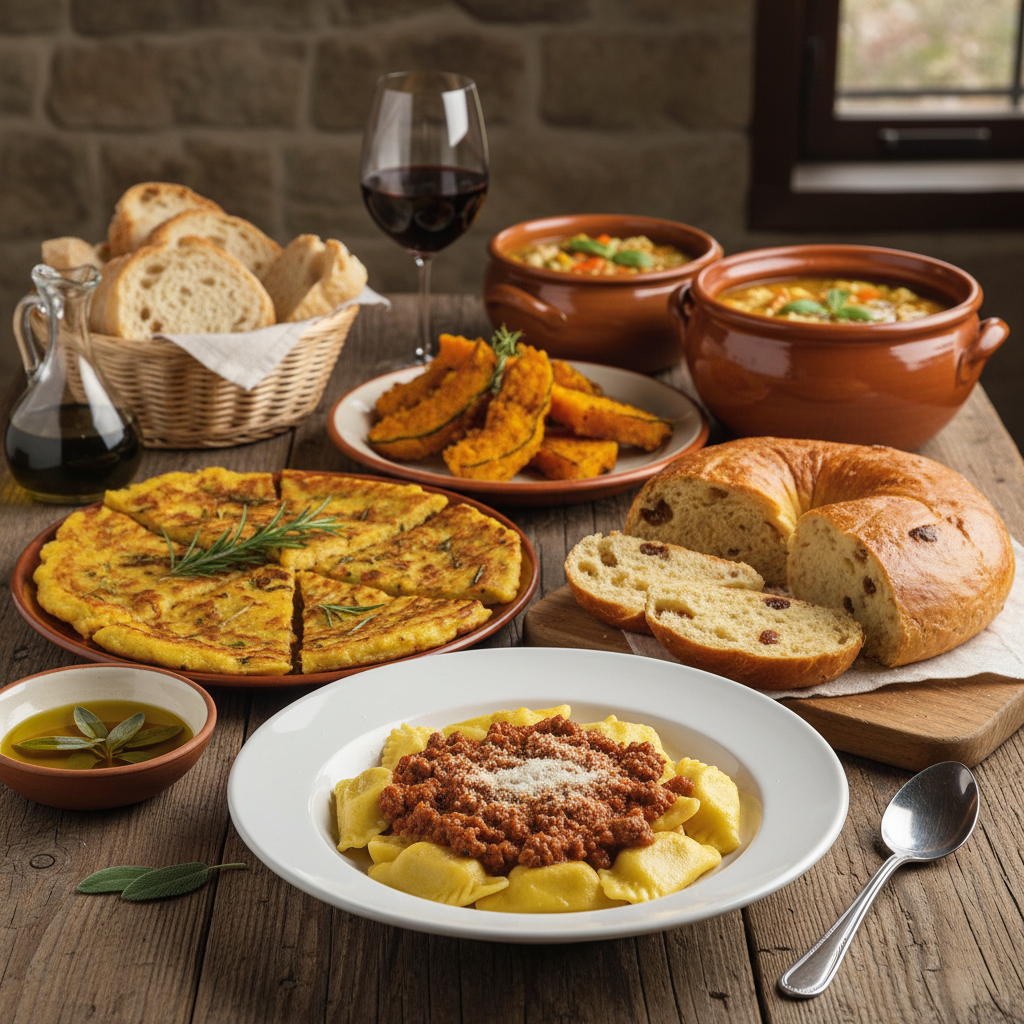
Lucca is not just the city of a hundred churches or the imposing Renaissance walls that embrace it; it is a treasure chest of culinary gems reflecting a proud and distinct identity within the Tuscan landscape. To visit this city without immersing yourself in its gastronomic tradition means grasping only part of its essence. Lucchese cuisine stands out for its refined balance between peasant origins, tied to the products of the land and the nearby Garfagnana, and an aristocratic history that has elevated humble ingredients into masterpieces of flavor.
For the discerning traveler, sitting down to eat in Lucca is not merely an act of nourishment, but a cultural ritual. From soups that tell the story of the changing seasons to sweets fragrant with anise and history, every bite is a piece of the local mosaic. In this guide, we will explore the seven essential dishes that define the city’s character, offering a compass to navigate historic trattorias and ancient bakeries—to experience it not as a passing tourist, but as a true Lucchese.
If there is one dish that embodies the convivial and festive spirit of Lucca, it is undoubtedly the tordello. Be careful not to confuse it with a generic tortello: the Tordello Lucchese is an institution, the undisputed star of Sunday lunches and major family celebrations. Its presence on a menu is the first indicator of a local restaurant’s authenticity.
What makes this fresh pasta special lies in its structure and filling. Unlike other Tuscan stuffed pastas that favor ricotta or potatoes, the Lucchese tordello boasts a rich and savory heart made of beef and pork, chard (or spinach), Parmesan, eggs, and a blend of spices that often includes thyme, locally called “pepolino.” The pasta sheet, rolled strictly by hand, must be sturdy enough to hold the generous filling, yet porous enough to absorb the sauce.
The sauce, in fact, plays a crucial role: tordelli are served almost exclusively with a thick and aromatic meat ragù, slow-cooked for hours. According to tradition reported by authoritative sources, as highlighted in a feature on La Nazione, tordelli al ragù represent one of the pinnacles of typical Lucchese cuisine—a dish that allows no shortcuts in its preparation.
To savor a plate of tordelli is to participate in a collective ritual. The half-moon shape and the sealing of the pasta, often pinched with fingers or with the tines of a fork, are gestures passed down from generation to generation. As the local tourism board emphasizes, tordelli are not just food, but an element of identity that tells the story of Lucchese families (more details at Turismo Lucca). For those wishing to plan an extended stay to explore all the variations of this dish, a 5-day itinerary in Lucca offers the time needed to appreciate the local cuisine without rushing.
Lucchese cuisine is, par excellence, a “spoon cuisine.” Soups are not mere appetizers, but complete meals that mark the agricultural calendar and celebrate the products of the land. There are three varieties that every visitor should know and taste to understand the depth of this tradition.
Unlike the classic Tuscan soups of humble origins, Garmugia is a soup with aristocratic roots, typically served in spring. Its richness comes from the ingredients: early garden vegetables such as asparagus, peas, artichokes, and fresh fava beans, combined with ground meat and pancetta. It is a hymn to spring and the rebirth of the earth, a hearty dish that, as reported by ItalyGuides, represents a unique entry in the regional soup landscape for its complexity and richness.
Moving toward the Garfagnana, the star ingredient becomes spelt. Spelt Soup is a rustic dish, thick and comforting, often enriched with borlotti beans. Garfagnana spelt, which holds IGP (Protected Geographical Indication) status, is an ancient grain cultivated in this area for millennia, and the soup made from it is a concentrate of health and flavor. It is the ideal comfort food for cooler days, a direct link to the rugged yet generous land of the Lucchese mountains.
Finally, one cannot speak of Lucca without mentioning Frantoiana Soup. As the name suggests, this dish celebrates the olive pressing season. It is a vegetable and legume soup that finds its completion only with the final addition, drizzled raw, of fresh extra virgin olive oil from the Lucchese hills, characterized by an intense and slightly spicy taste. For a deeper look at these three cornerstones of local cuisine, Il Giornale del Cibo offers a detailed overview of the variants and their seasonal importance. For those wishing to extend the culinary experience beyond the walls, these soups are often included in a broader gastronomic tour of Tuscany.
The genius of Tuscan cuisine often lies in the ability to waste nothing, elevating leftovers to the rank of delicacy. Rovelline Lucchesi are the most striking example. This second course was born from the need to use leftover meat, typically breaded and fried veal or beef slices that may have remained from a previous meal.
The secret of rovelline lies in the second cooking. The already fried slices are “ripassate” (reheated) and stewed in a tomato sauce enriched with capers, garlic, and aromatic herbs (often sage or parsley). The result is surprising: the breading absorbs the sauce, softening and becoming packed with flavor, while the meat remains tender. It is a dish with a bold, robust taste that requires plenty of Tuscan bread (sciocco, meaning unsalted) for the final “scarpetta” (mopping up the sauce).
Despite its humble origins, today rovelline are considered one of the city’s must-try specialties. As confirmed by Il Giornale del Cibo, they represent a must for anyone wanting to savor true Lucchese home cooking. International guides like ItalyGuides also include rovelline among the dishes to absolutely try, highlighting how the simplicity of ingredients manages to create a complex and satisfying harmony of flavors.
If tordelli are the king of savory dishes, Buccellato is the undisputed sovereign of Lucchese pastry. It is not an elaborate or lavish dessert, but a ring-shaped cake (or sometimes an elongated bread) with a shiny, brown surface that conceals a soft dough rich with raisins and anise seeds. Its name derives from the Latin buccella, meaning morsel, testifying to its ancient history, dating back to Roman times when it referred to soldiers’ bread.
In Lucca, there is a popular saying that goes: “Chi viene a Lucca e non mangia il buccellato è come non ci fosse stato” (Whoever comes to Lucca and doesn’t eat buccellato is as if they had never been there). This sweet is omnipresent: in the windows of historic pastry shops in the center, on breakfast tables, and as dessert after meals, often accompanied by a glass of Vin Santo. Its versatility is remarkable: excellent fresh, it becomes sublime if lightly toasted the next day, when the anise aromas are released with greater intensity.
It is considered one of the 10 essential products to taste in the city, as reported in the guide by Welcome2Lucca. The traditional recipe, jealously guarded by local bakers, is also described on the official portal Turismo Lucca, which emphasizes its symbolic role for the community. Enjoying a slice of buccellato while strolling on the walls is an experience that goes beyond simple tasting; it is a moment of connection with the city. Even those planning a day trip to Florence departing from Lucca often bring a buccellato as a gift, a symbol of local culinary pride.
Beyond the famous buccellato, Lucchese pastry offers two other gems that deserve attention: Torta coi becchi and Necci. These sweets tell two different aspects of the territory: urban creativity and the influence of the mountains.
Torta coi becchi is immediately recognizable for its shortcrust pastry base that forms “becchi” (points or peaks) along the entire outer edge. There are two main variants that divide palates: the chocolate one and the vegetable one. The “coi becchi di verdura” (vegetable) version is particularly interesting because it uses boiled chard, pine nuts, raisins, and spices, creating a sweet with an ancient flavor—sweet but not cloying—reminiscent of Renaissance tarts.
Necci, on the other hand, take us directly into the forests of Garfagnana. They are thick crêpes made exclusively with chestnut flour and water, cooked on iron plates called “testi.” They are served rolled and filled with fresh sheep’s milk ricotta (sometimes sweetened, sometimes not). Chestnut flour, once the staple of poor mountain diets, is today a sought-after ingredient for its natural sweetness and unique aromatic profile.
Both of these specialties are cited as unmissable by Welcome2Lucca and described in their traditional variants by Turismo Lucca. Tasting necci is the best way to conclude an excursion into the hinterland, perhaps after visiting the evocative Ponte della Maddalena, immersed in the landscapes that gave rise to these flavors.
For those who prefer a quick meal but one rich in flavor, Lucca offers historic “street food” options that have nothing to envy from restaurant dishes. The queen of snacks is Cecina (known elsewhere as farinata), a thin cake made of chickpea flour, water, oil, and salt. In Lucca, it must be strictly soft on the inside and with a golden crust on the outside, served piping hot with a generous sprinkle of black pepper. It is often eaten inside small focaccias or bread.
Another dish that sits halfway between street food and trattoria comfort food is Matuffi (in other parts of Tuscany known as “polenta incatenata”). It consists of soft polenta served in alternating layers with meat or mushroom sauce and Parmesan. It is a dish that warms the heart, perfect for winter days.
Finally, special mention goes to Potato Bread from Garfagnana (often a Slow Food presidium). The addition of boiled potatoes to the dough makes this bread incredibly soft, flavorful, and capable of staying fresh for days. It is the ideal companion for Tuscan cured meats, particularly Biroldo (a typical blood sausage) or prosciutto crudo. ItalyGuides strongly suggests trying both farinata and matuffi to understand the variety of local cuisine, while potato bread is celebrated among the excellences by Welcome2Lucca. These specialties are often featured during events and festivals in Lucca, where you can taste them in their most authentic and popular versions.