The train from Lucca to Florence takes just ninety minutes, yet it carries you between two entirely different worlds. Lucca wraps you in intimate medieval charm, quiet piazzas, and the gentle pace of provincial Tuscany. Florence overwhelms with Renaissance magnificence, artistic treasures that changed human history, and an energy that has drawn dreamers and creators for seven centuries.
Making a day trip from Lucca to Florence offers the best of both experiences. You wake in your peaceful walled city, perhaps cycling the ramparts before breakfast. By mid-morning you stand before Botticelli’s Venus or gaze up at Brunelleschi’s impossible dome. By evening you return to Lucca’s tranquility, processing the day’s wonders over a quiet dinner in a familiar piazza.
This guide helps you maximize your Florence day trip, balancing must-see masterpieces with hidden corners, famous monuments with local flavors. Whether you have visited Florence before or approach it fresh, experiencing the city as a day-tripper from Lucca brings unique advantages that overnight visitors never enjoy.
The train remains the smartest choice for day-trippers. Trenitalia operates frequent regional services between Lucca and Firenze Santa Maria Novella, Florence’s central station. Trains depart roughly every hour, with journey times between eighty and ninety minutes depending on the service.
Purchase tickets at Lucca’s station from automated machines or the ticket office. Regional trains do not require seat reservations, offering flexibility if you miss your intended departure. Validate your ticket in the green machines on the platform before boarding, an essential step that avoids hefty fines.
The early departures around seven or eight in the morning suit ambitious sightseers. You arrive in Florence before nine, positioning yourself perfectly for museum openings and beating the thickest crowds. The return journey offers equally frequent options, with the last trains departing Florence around ten in the evening.
Driving from Lucca to Florence takes approximately ninety minutes via the A11 autostrada, roughly matching train times. However, parking in Florence presents significant challenges and expenses. The historic center operates as a ZTL, a limited traffic zone where unauthorized vehicles face automatic fines captured by cameras. Parking garages near the center charge premium rates, easily exceeding thirty euros for a day.
If you must drive, consider parking at Villa Costanza, a large facility near the Scandicci tramway terminus. The tram delivers you to the center in twenty minutes at minimal cost. This solution works particularly well for travelers continuing elsewhere after Florence rather than returning to Lucca.
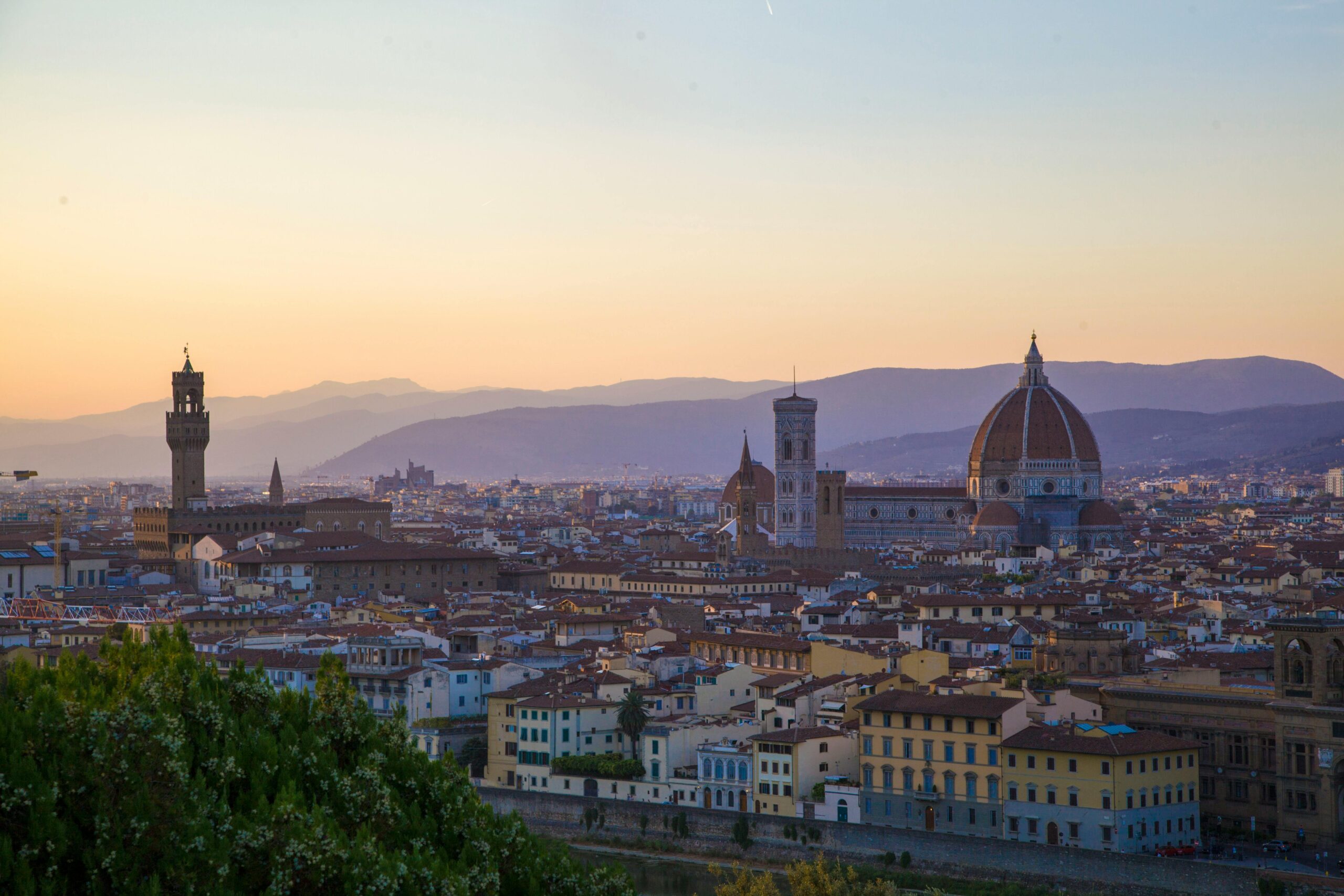
Emerge from Santa Maria Novella station and walk directly toward the Duomo. Nothing quite prepares you for the first glimpse of Brunelleschi’s dome rising above the rooftops. This engineering marvel, completed in 1436 without traditional scaffolding, remains the largest masonry dome ever constructed. Its rust-red tiles and white marble ribs have defined the Florentine skyline for nearly six centuries.
The cathedral complex deserves careful attention. The Baptistery doors, which Michelangelo allegedly called the Gates of Paradise, display Lorenzo Ghiberti’s bronze panels depicting Old Testament scenes. The cathedral facade, though nineteenth-century rather than medieval, dazzles with its pink, white, and green marble geometry. Giotto’s campanile rises beside the main structure, offering those willing to climb 414 steps panoramic views across the city.
Climbing Brunelleschi’s dome itself requires advance reservation through the official Opera del Duomo website. The experience justifies early planning. You ascend between the dome’s inner and outer shells, witnessing the construction techniques that baffled contemporaries, before emerging on the lantern terrace with Florence spread below like a Renaissance painting.
From the Duomo, walk south through Piazza della Signoria toward the Uffizi Gallery. This world-famous museum houses the Medici art collection, arguably the greatest assembly of Renaissance masterpieces under one roof. Botticelli’s Primavera and Birth of Venus alone justify the visit, but room after room reveals treasures from Giotto to Caravaggio.
Advance booking proves essential, particularly during peak season. Purchase timed-entry tickets through the official Uffizi website weeks before your visit. The reservation fee adds minimally to the ticket price while saving hours of potential queuing. Early morning slots, between eight-thirty and nine, typically offer the calmest experience.
A focused Uffizi visit takes approximately two to three hours. Attempting to see everything leads to exhaustion and diminishing appreciation. Instead, identify your priorities beforehand. The Botticelli rooms draw the largest crowds for good reason. Leonardo’s Annunciation reveals the young master’s emerging genius. Titian’s Venus of Urbino scandalized and inspired in equal measure. The Caravaggio rooms conclude the chronological journey with baroque intensity.
Exit the Uffizi onto the Piazzale degli Uffizi, with its colonnade of statues depicting great Tuscan figures. Turn right toward the Arno River and the Ponte Vecchio, Florence’s most photographed bridge. Medieval butcher shops once lined this crossing, but the Medici relocated goldsmiths here in the sixteenth century, finding the previous tenants too malodorous. Jewelry shops remain today, their glittering windows contrasting with the bridge’s ancient stonework.
Cross into the Oltrarno, the neighborhood across the Arno that many visitors overlook. This authentic quarter retains the artisan character that gentrification has erased elsewhere in the center. Peek into furniture restoration workshops. Admire leather craftsmen cutting and stitching by hand. Pause at a neighborhood bar where elderly Florentines debate calcio over morning espresso.
Avoid the tourist menus clustered around major monuments. Instead, venture slightly off the beaten path for genuine Florentine cuisine at reasonable prices. The Mercato Centrale offers an excellent option for day-trippers. The ground floor functions as a traditional food market where you can assemble a picnic of fresh bread, aged pecorino, prosciutto, and seasonal fruit. The upstairs food hall provides sit-down options ranging from lampredotto sandwiches to quality pasta.
For a proper sit-down lunch, seek out a neighborhood trattoria in the Oltrarno or near Sant’Ambrogio market. Traditional Florentine dishes differ notably from Lucchese cuisine. Ribollita, the bread-thickened vegetable soup, achieves near-mythic status here. Bistecca alla fiorentina, the massive T-bone steak grilled rare over chestnut coals, serves two generously. Trippa alla fiorentina offers adventurous eaters tender tripe in tomato sauce, a workingman’s dish elevated to regional specialty.
Budget-conscious travelers should note that Florentine restaurants charge for bread and service, typically adding two to four euros per person regardless of what you order. This coperto appears on every bill and represents standard practice rather than tourist targeting.
After lunch, find a historic cafe for coffee. Florentines take their espresso standing at the bar, a ritual that costs significantly less than sitting at a table. Caffe Gilli in Piazza della Repubblica has served customers since 1733, its belle epoque interior worth admiring even if you only pause briefly. Rivoire on Piazza della Signoria offers perhaps the city’s finest hot chocolate alongside prime people-watching territory.
The Galleria dell’Accademia exists primarily for one purpose, housing Michelangelo’s David. This seventeen-foot marble giant, carved from a single flawed block that other sculptors had abandoned, represents human artistic achievement at its absolute peak. Standing before David, you understand why contemporaries wept upon first seeing him.
Like the Uffizi, the Accademia requires advance reservation during busy periods. The museum itself takes less than an hour to visit thoroughly. Beyond David, Michelangelo’s unfinished Prisoners offer fascinating insight into his sculptural process, figures seemingly struggling to emerge from raw stone.
Save energy for one essential climb. Piazzale Michelangelo, the terrace overlooking Florence from the south, provides the postcard panorama that defines this city. The walk from the center takes roughly thirty minutes, ascending gradually through quiet residential streets before steep final stairs.
The reward justifies every step. The entire centro storico spreads before you, the Duomo dome commanding the composition, the Arno curving gracefully beneath its bridges, the hills of Fiesole rising in the northern distance. Arrive in late afternoon for soft golden light. Pack a bottle of wine and join locals who gather here for sunset, one of Italy’s great free experiences.
Art fatigue is real, and Florence offers alternatives for those saturated with Renaissance masterpieces. The Boboli Gardens behind Palazzo Pitti provide green space and sculptural surprises across rolling terrain. The San Lorenzo market district tempts shoppers with leather goods, though quality varies enormously and bargaining proves essential. The Basilica of Santa Croce houses tombs of Galileo, Michelangelo, and Machiavelli, a pantheon of Florentine genius.
For contemporary contrast, visit the Museo Novecento near Santa Maria Novella station. This often-overlooked museum traces Italian art from the twentieth century forward, providing valuable counterpoint to Renaissance immersion. Its rooftop terrace cafe offers another excellent Duomo view.
Before catching your return train, experience the Florentine aperitivo ritual. Between six and eight in the evening, bars throughout the city offer drinks accompanied by substantial buffets of finger foods, small sandwiches, and simple hot dishes. For the price of a cocktail or glass of wine, often under ten euros, you effectively gain a light dinner.
The Sant’Ambrogio neighborhood hosts some of the most authentic aperitivo scenes, frequented by local students and young professionals rather than tourists. Closer to the station, establishments around Piazza Santa Maria Novella cater to travelers without sacrificing quality.
Evening trains return you to Lucca relaxed and satisfied. The journey passes quickly as you watch Tuscan landscapes darken outside the window, processing the day’s accumulated wonders. Regional trains typically run until around ten at night, allowing flexibility in your departure time.
Arriving back at Lucca’s station, the contrast strikes immediately. After Florence’s crowds and grandeur, Lucca’s intimate scale feels like a warm embrace. Walk through Porta San Pietro, perhaps stopping for a final gelato, and appreciate anew why you chose this walled city as your Tuscan base.
Book museum tickets at least two weeks ahead during spring and fall, earlier for summer visits. The official websites for the Uffizi and Accademia offer the most reliable reservations, despite less polished interfaces than reseller sites.
Wear comfortable walking shoes with good support. Florence’s historic center covers more ground than it appears on maps, and attractions spread across uneven stone streets. Leave fashion heels for evening events.
Carry water and snacks, particularly during summer months. The intense cultural consumption of a Florence day trip demands physical energy. Staying hydrated and fed helps maintain the mental alertness that great art deserves.
Protect against pickpockets in crowded areas. The crush around the Duomo and on the Ponte Vecchio attracts professional thieves. Keep valuables in front pockets or secure bags, remain aware of your surroundings, and you will have no problems.
Finally, accept that one day cannot contain all of Florence. You will miss things. The Palazzo Pitti, the Brancacci Chapel, the San Marco frescoes, and countless other treasures await future visits. Rather than rushing to check boxes, immerse yourself fully in what you do experience. Florence rewards depth over breadth, attention over accumulation.
Return to Lucca knowing you have touched something extraordinary. The Renaissance masters whose works you witnessed were not gods but humans who pushed creative limits through dedication and vision. Walking streets they walked, seeing skies they saw, you connect across centuries to their enduring achievement. That connection travels home with you, enriching not just your Tuscan holiday but your understanding of what human beings can accomplish.
SEO Title (Meta Title): Florence Day Trip from Lucca: What to Do in One Day | 2025 Guide
Character count: 60 (optimal range: 50-60 characters)
Focus Keyphrase: Florence day trip from Lucca
Meta Description: Plan the perfect Florence day trip from Lucca. Train tips, Uffizi and David visits, where to eat, and sunset at Piazzale Michelangelo. Your complete one-day guide.
Character count: 158 (optimal range: 150-160 characters)
Slug: florence-day-trip-from-lucca-one-day-guide
Keyphrase Synonyms: Lucca to Florence day trip, Florence in one day, visiting Florence from Lucca
Related Keyphrases: