If you have already walked the magnificent Renaissance walls, cycled through the narrow medieval streets, and indulged in a slice of buccellato at a local café, you might think you have seen the heart of Lucca. But to truly understand the soul of this city, you need to step just outside its perimeter. Beyond the urban fabric lies a landscape that tells a different story—one of immense wealth, artistic ambition, and aristocratic leisure.
Welcome to the world of the Ville Lucchesi (Lucca’s historic villas). These aren’t just big houses; they are architectural masterpieces surrounded by some of the most beautiful gardens in Italy. Built largely between the 15th and 19th centuries by wealthy silk merchants and bankers, these summer residences were designed to impress. They were the stage for lavish parties, secret romances, and political maneuvering.
For visitors staying with us at Flat in Town, a day trip to the villas offers a perfect change of pace. It is a chance to breathe fresh countryside air while soaking in art and history. In this guide, we are going to take you on a tour of the most spectacular estates, share the ghostly legends that haunt them, and give you all the practical tips you need to enjoy Tuscany as a local.
To understand why these villas exist, you have to look back at Lucca’s history as an independent republic. The local nobility became incredibly wealthy through banking and the silk trade. However, summers within the city walls could be stiflingly hot. So, the rich families—the Mansi, the Torrigiani, the Buonvisi—built country estates in the rolling hills north of the city.
These homes were not merely farmhouses. They were status symbols. The architecture evolved from modest country manors into grand palaces rivaling those in France. The gardens were transformed into theatrical stages with fountains, grottos, and exotic plants brought from around the world. Today, visiting these villas is like stepping onto a movie set for a period drama.
While there are dozens of villas scattered across the landscape, a few stand out as absolute must-visits. They are mostly located in the areas of Marlia, Capannori, and Camigliano. You can easily visit two or three in a single day, making for a relaxed and culturally rich itinerary.
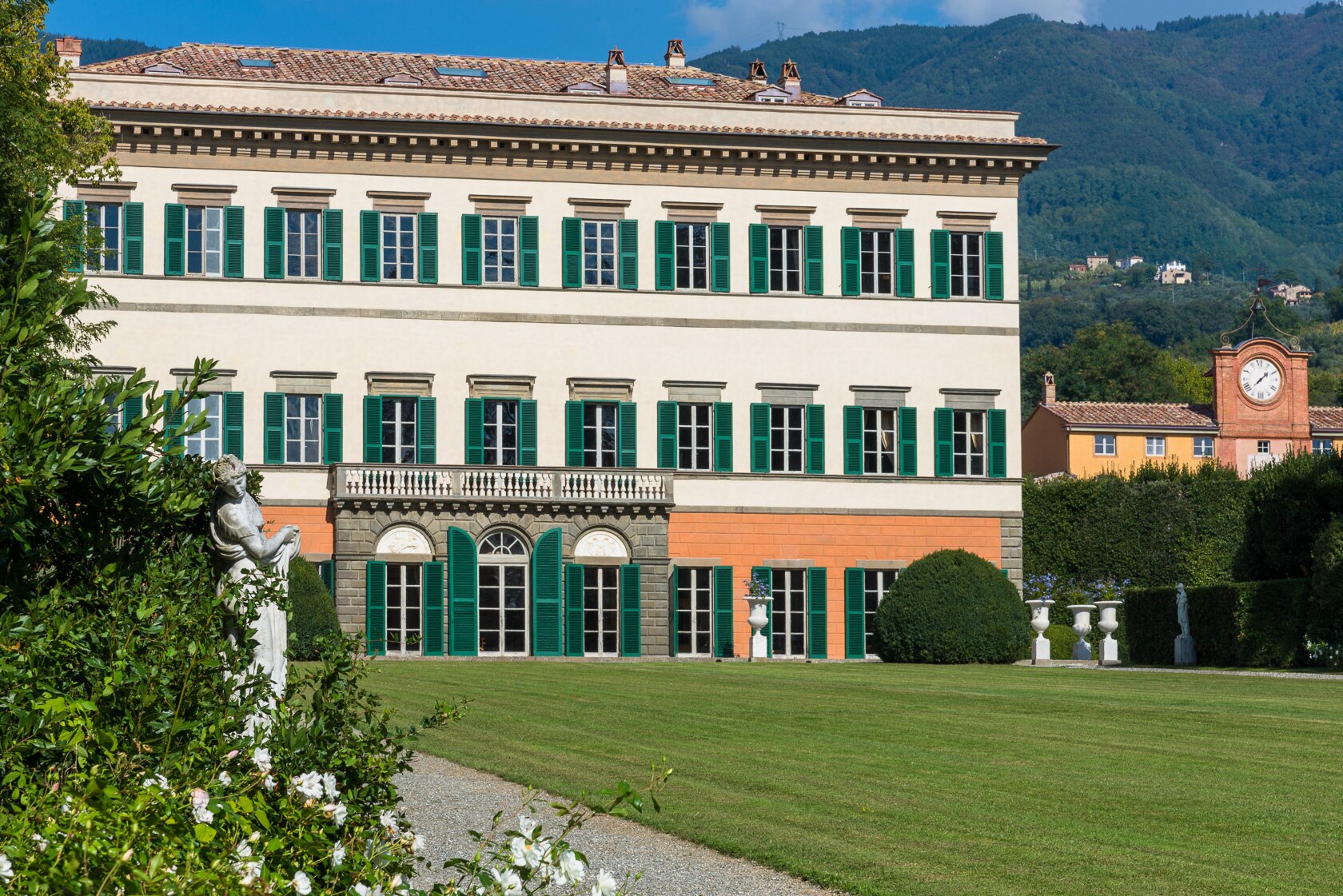
If you only have time to visit one estate, let it be Villa Reale di Marlia. This is the heavy hitter of Lucca’s villas, and its history is intimately tied to one of the most powerful women in European history: Elisa Bonaparte Baciocchi, Napoleon’s sister.
Elisa, who was the Princess of Lucca, fell in love with this estate in the early 19th century. She bought the existing Villa Orsetti and expanded it, merging distinct gardens into one massive park. Her touch is everywhere, from the Empire-style renovation of the interiors to the vast lawns that slope down toward a lake.
The park at Villa Reale is famous for two specific features that you absolutely cannot miss. First is the Teatro d’Acqua (Water Theatre). It is a stunning 17th-century fountain structure located behind the main villa, decorated with statues, pebbles, and cascading water. It is a perfect example of how the Lucchese nobility used water not just for irrigation, but for show.
The second feature is the Teatro di Verzura (Green Theatre). This is arguably the oldest topiary theatre in Europe. Carved entirely out of yew hedges, it features a stage, wings for the actors, and a prompt box, all made of living plants. Terracotta statues representing characters from the Commedia dell’Arte stand in for the audience. It is said that the legendary violinist Paganini once performed here for Elisa Bonaparte. Standing there today, you can almost hear the faint sound of strings in the wind.
Lucca is famous for its camellias, and Villa Reale boasts two distinct avenues of them. If you are visiting in March or April, this is a sensory explosion. The colors range from pure white to deep crimson, and the sheer number of varieties is staggering. Even if you visit in summer or autumn, the park offers plenty of shade, a lemon garden, and a Spanish garden that feels incredibly romantic.
“Walking through Villa Reale isn’t just a garden tour; it’s walking in the footsteps of a princess who wanted to bring the grandeur of Paris to the Tuscan countryside.”
While Villa Reale is grand and regal, Villa Torrigiani is theatrical and playful. Located in Camigliano, this villa hits you with its visual impact the moment you arrive. The façade is a triumph of the Baroque style, lined with statues and balustrades that seem to reach for the sky. It is arguably the most photogenic of all the villas.
The villa was originally built in the 16th century but was completely overhauled in the 17th century by the Marquis Nicolao Santini. Santini was the ambassador to the court of the Sun King (Louis XIV) in Versailles, and he brought that French taste for opulence back to Lucca.
The interior of the villa is fascinating, with original furniture and elaborate frescoes, but the real magic happens in the Garden of Flora. This sunken garden was designed to surprise guests. In the past, the Marquis would activate hidden water jets to soak unsuspecting visitors—a popular prank among the nobility known as giochi d’acqua (water games).
Today, you can admire the intricate flower beds, the large pools reflecting the façade, and the majestic cypress avenue leading up to the house. It feels more intimate than Villa Reale but equally impressive in its attention to detail.
Just a short distance from Villa Torrigiani lies Villa Mansi. Architecturally, it is a stunning example of the transition from austere Mannerism to the lighter Baroque style. The façade is elegant, and the interiors are filled with tapestries and frescoes that showcase the immense wealth of the Mansi family, who were prominent silk merchants.
However, Villa Mansi is perhaps most famous for a dark legend that every local knows. It adds a layer of mystery to your visit that you won’t find in the guidebooks describing architecture.
The story goes that Lucida Mansi, a noblewoman of incredible beauty, was terrified of aging. Her vanity was so great that she covered every room in the villa with mirrors so she could admire herself constantly. One night, realizing her youth was fading, she made a pact with the Devil. He granted her thirty years of eternal youth in exchange for her soul.
For three decades, she lived a life of debauchery and excess. But when the time was up, the Devil came to collect. Legend says he dragged her into a burning carriage and drove it straight into the botanical pond in the garden. Locals swear that on misty nights, you can still see her face reflecting in the water or hear the rattle of a ghostly carriage. When you visit the pond, take a closer look—if you dare!
Visiting these villas requires a little bit of planning, as they are spread out over a few kilometers. Here is how to make the most of your day trip from your Flat in Town apartment.
You have three main options for reaching the villas:
The villas are generally open from March to November. The absolute best time is Spring (March-May) when the camellias, azaleas, and rhododendrons are in bloom. The gardens are lush, and the temperature is perfect for walking. Autumn (September-October) is also beautiful, with the foliage turning gold and russet against the cypress trees.
If you visit in the summer, try to go in the morning. The Lucchese humidity can be intense, and while the gardens offer shade, walking in the midday sun can be tiring.
To help you decide which locations fit your schedule, here is a quick comparison of what each estate offers.
| Villa Name | Best For | Vibe | Estimated Visit Time |
|---|---|---|---|
| Villa Reale di Marlia | History buffs, garden lovers, families | Grand, Royal, Expansive | 2 – 3 Hours |
| Villa Torrigiani | Architecture fans, photographers | Baroque, Theatrical, Colorful | 1 – 1.5 Hours |
| Villa Mansi | Folklore lovers, art enthusiasts | Elegant, Haunted, Mysterious | 1 Hour |
| Villa Grabau | Botany enthusiasts (Orangerie) | Intimate, Botanical, Classic | 1 Hour |
If you have extra time or are a returning visitor looking for something new, there are other estates worth exploring. Villa Grabau is located right next to Villa Reale. It is famous for its Limonaia (Lemon House), one of the most beautiful in Tuscany, where dozens of terracotta pots with century-old lemon trees are stored during winter.
Villa Oliva is another neighbor, known for its unique architecture designed by the Renaissance master Matteo Civitali. Its garden is characterized by impressive cypress alleys and fountains. These villas are often quieter than the “big three,” offering a more peaceful contemplation of the Tuscan landscape.
In a world where travel is often rushed, the Ville Lucchesi invite you to slow down. They remind us of a time when leisure was an art form. Walking through these parks, you aren’t just a tourist; you are a guest of history.
You can bring a book and sit on a bench overlooking a swan-filled lake, or simply wander the gravel paths listening to the crunch of your footsteps. It complements the urban energy of Lucca perfectly. After a morning at the villas, returning to your apartment in the city center feels like coming home.
So, when you book your stay with Flat in Town, make sure to leave a day open for the countryside. Whether you are chasing the ghost of Lucida Mansi or simply chasing the perfect shade of green in the botanical gardens, the villas of Lucca are waiting to reveal their secrets to you.