This article includes AI generated content (text, images) obtained with Pressnaut. All content has been fact-checked and manually revised by an human editor.
Have you ever wondered what happens to a Tuscan fairytale city when the summer crowds fade away, the tour buses depart, and the sun sets a little earlier over the medieval walls? Most travelers only see Lucca in the blazing heat of July or August. They battle for space on the Renaissance ramparts and wait in long lines for gelato. But there is a secret season here, a time when the city reclaims its soul and offers it up to the few who are lucky enough to visit.
Lucca in winter is an entirely different world. It is the definition of atmospheric. Gone is the frenetic energy of peak tourism, replaced by a slow, rhythmic heartbeat that feels authentically Italian. The cobblestones seem to echo with history rather than footsteps, and the locals—the real Lucchesi—emerge to reclaim their piazzas.
The aesthetic shift is profound. As noted by travel enthusiasts who have discovered this off-season gem, winter has a soft glow with lights along lanes that feel intimate and cosy. This isn’t just poetic license; it’s a tangible reality. The lower angle of the winter sun casts long, dramatic shadows across the Romanesque facades of San Michele and the Cathedral of San Martino, creating a photographer’s dream that simply doesn’t exist at high noon in June.
There is a romance to Lucca in the colder months that feels almost cinematic. Imagine walking hand-in-hand through the mist that occasionally hugs the city walls in the morning, or ducking into a warm café as dusk falls, the windows steamy and inviting. This is the time for slow travel, for lingering over a glass of bold red wine without feeling rushed, and for seeing the city not as a checklist of sights, but as a living, breathing community.
Let’s be real for a moment: Tuscany in winter is not a tropical escape. However, compared to Northern Europe or much of North America, the climate is remarkably gentle. Understanding the weather is key to enjoying your trip, as it dictates everything from your wardrobe to your daily itinerary.
Generally, you can expect a crisp, cool climate. It’s the kind of weather that wakes you up and makes the heavy Tuscan cuisine taste even better. In terms of hard numbers, the average temperatures range between 7°C and 13°C (44°F – 55°F) during the warmest part of the day. It’s chilly, certainly, but rarely freezing during the daylight hours. However, travelers should be prepared for variability; winter temperatures can drop to averages of 40-54°F (4-12°C) across the region, meaning mornings and evenings will require a good coat.
The most important thing to prepare for isn’t necessarily the cold—it’s the dampness and the dark. Winter in Lucca brings short days, chilly to downright cold temperatures, and rain (sometimes LOTS of rain). The sun sets early, often before 5:00 PM, which changes the rhythm of sightseeing. You’ll want to maximize your outdoor activities in the morning and early afternoon.
To navigate this weather like a pro, leave the shorts at home and embrace the art of layering. Here is a quick checklist for your suitcase:
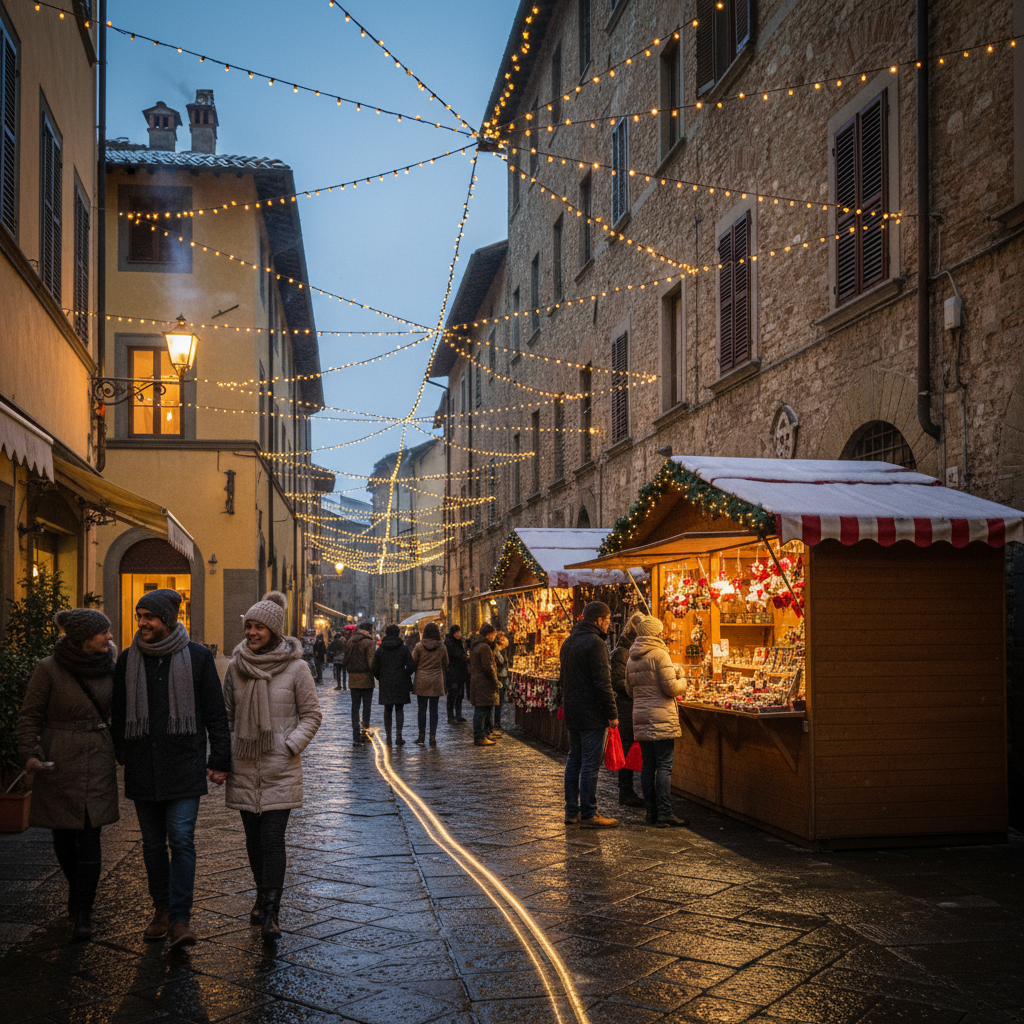
If you are visiting in December, you are in for a spectacular treat. Lucca takes Christmas seriously, but it does so with an elegance that avoids the tacky commercialism found in some other cities. The historic center transforms into a glowing labyrinth of festive cheer.
The illumination of the city is subtle and magical. It sparkles overhead along streets strung with lights, guiding you from one piazza to the next. One of the absolute highlights is Chiasso Barletti. This narrow, medieval alleyway is charming year-round, but during Christmas, it is draped in golden lights that reflect off the brick arches, creating a tunnel of warmth that feels like stepping back in time.
Unlike the frenzied markets of Northern Europe, Lucca’s approach is more artistic. You will find that Christmas can be found in piazzas filled with oversized decorations and artistic trees. Piazza San Michele often hosts a towering tree that competes with the magnificent church façade for your attention, while other squares feature modern art installations using light.
For those looking to take a piece of this magic home, Christmas shopping along Via Fillungo is an absolute must. The boutiques here go all out with their window displays (vetrine), competing for the most beautiful arrangement. It’s the perfect place to find high-quality Italian leather, silk, or artisanal foods to wrap up for loved ones back home.
The atmosphere builds steadily throughout December. There is a palpable buzz in the air—the sound of children laughing near the carousel in Piazza Napoleone (where you might also find an ice skating rink), the scent of roasting chestnuts on the corners, and the anticipation of the holidays. It is a communal celebration that visitors are warmly invited to join.
Tuscan food is arguably designed for winter. While summer salads and white wines are lovely, the region’s cuisine truly shines when the temperatures drop. We are talking about ribollita (a hearty bread and vegetable soup), pappardelle al cinghiale (wild boar pasta), and rich, tannic red wines that warm you from the inside out.
The dining experience in winter is far more relaxed. You aren’t being rushed to free up a table for the next tourist. Instead, you can escape the cold and join Tuscans as they feast their way through winter at many a local trattoria. The restaurants become cozy refuges, filled with the murmur of Italian conversation and the clinking of glasses.
While winter is generally quieter, do not make the mistake of thinking you can walk into any restaurant on a major holiday. Christmas Lunch (Pranzo di Natale), Christmas Eve, and New Year’s Eve (San Silvestro) are huge dining events for locals. Families book their favorite tables weeks, sometimes months, in advance. If you plan to eat out on these specific dates, reservations are absolutely essential.
If the weather turns particularly wet, or if you simply want to dive deeper into the local culture, why not warm up with an authentic cooking class? Learning to make fresh pasta or a proper Tuscan roast is a fantastic way to spend a rainy afternoon. Plus, the heat of the kitchen is the best antidote to a chilly December day.
When the clouds roll in, Lucca offers plenty of indoor sanctuaries that feed the mind and soul. The city has a rich tradition of craftsmanship and art that remains vibrant throughout the winter months.
One of the city’s most beloved traditions is the Mercato Antiquario (Antique Market), held on the third weekend of every month. It is a sprawling treasure hunt that takes over the streets and squares. Winter is a fantastic time to visit this market because the crowds are thinner, allowing you to really engage with the vendors. It is the perfect place to see the weekly antique market to showcase some of the finest artisans and perhaps find a unique piece of history to take home, from vintage prints to antique jewelry.
A crucial tip for winter culture vultures involves opening hours. The pace of life slows down, and so do the schedules of museums and towers. As noted by travel experts, from November–March: visits only through request for certain smaller sites or private villas. Always check the current hours for major attractions like the Guinigi Tower or the Cathedral before you head out, as they often close earlier in the day or have reduced opening days compared to the summer season.
This is the perfect season for exploring Lucca’s best museums without having to elbow your way to the front of the exhibit. Palazzo Mansi, with its opulent tapestries and art collection, feels almost like a private tour in January.
For the true introvert or the traveler seeking absolute authenticity, there is a specific window of time that is pure gold. This is the period after the Christmas decorations come down but before the spring thaw begins. We are talking about the weeks after the end of the holiday season, between Epiphany in early January and the beginning of Carnevale in late February / early March.
During these weeks, Lucca is quiet. Wonderfully, beautifully quiet. You might find yourself alone on the wall walk (Mura di Lucca) on a Tuesday morning. The shopkeepers have time to chat. The city feels like it belongs entirely to the residents—and you. It is a time for introspection, for writing, for sketching, or simply for being.
However, if the quiet gets a little too quiet for you, this is an excellent base for exploring the wider region. Since the roads are clear of tourist buses, you can easily take a day trip to San Gimignano or Volterra. Volterra, in particular, is moody and atmospheric in winter, its Etruscan stones looking even more mysterious under a grey sky.
To wrap up your winter guide, let’s look at the logistics. Visiting during the off-season has practical benefits that go beyond the romantic atmosphere.
First and foremost, winter in Tuscany is low season for tourism. This means accommodation prices are generally lower, and you have a better selection of apartments and hotels. You can snag a luxury stay that might be out of budget in August.
Driving and parking also become significantly less of a headache. While the ZTL (Limited Traffic Zone) is always active within the walls, the parking lots just outside the walls are far less congested. For a stress-free experience, check out our complete guide to parking in Lucca to find the best spots near your accommodation.
Summary of Winter Pros:
Lucca in winter isn’t for the sun-seeker. It’s for the culture-seeker, the romantic, and the traveler who wants to look beneath the surface. It’s a time of mist, wine, art, and silence. And once you’ve experienced the city’s “soft glow” in December or January, you might find it impossible to visit any other time.